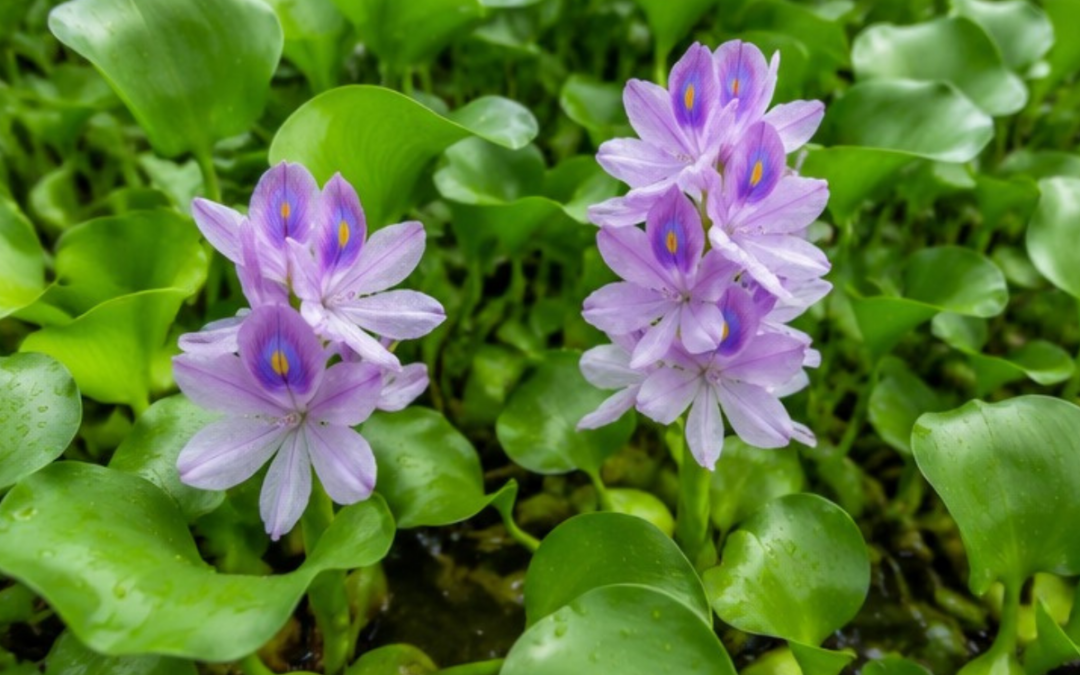
Water hyacinth is often considered one of the most beautiful aquatic plants you’ll find in a pond. Its glossy green leaves and striking lavender flowers make it popular in ornamental water gardens, but in ponds and small lakes, it can quickly become one of the most troublesome aquatic weeds.
At TLC Perfect Pond, we frequently help pond owners manage excessive water hyacinth growth before it overwhelms their ponds. While a few scattered plants may seem harmless, it has an incredible ability to multiply and cover entire ponds in a surprisingly short amount of time.
The key to successful management is understanding why this floating plant spreads so rapidly and the problems it creates once it becomes established.
Why Water Hyacinth Spreads So Fast
Water hyacinth is one of the fastest-growing aquatic plants in the world.
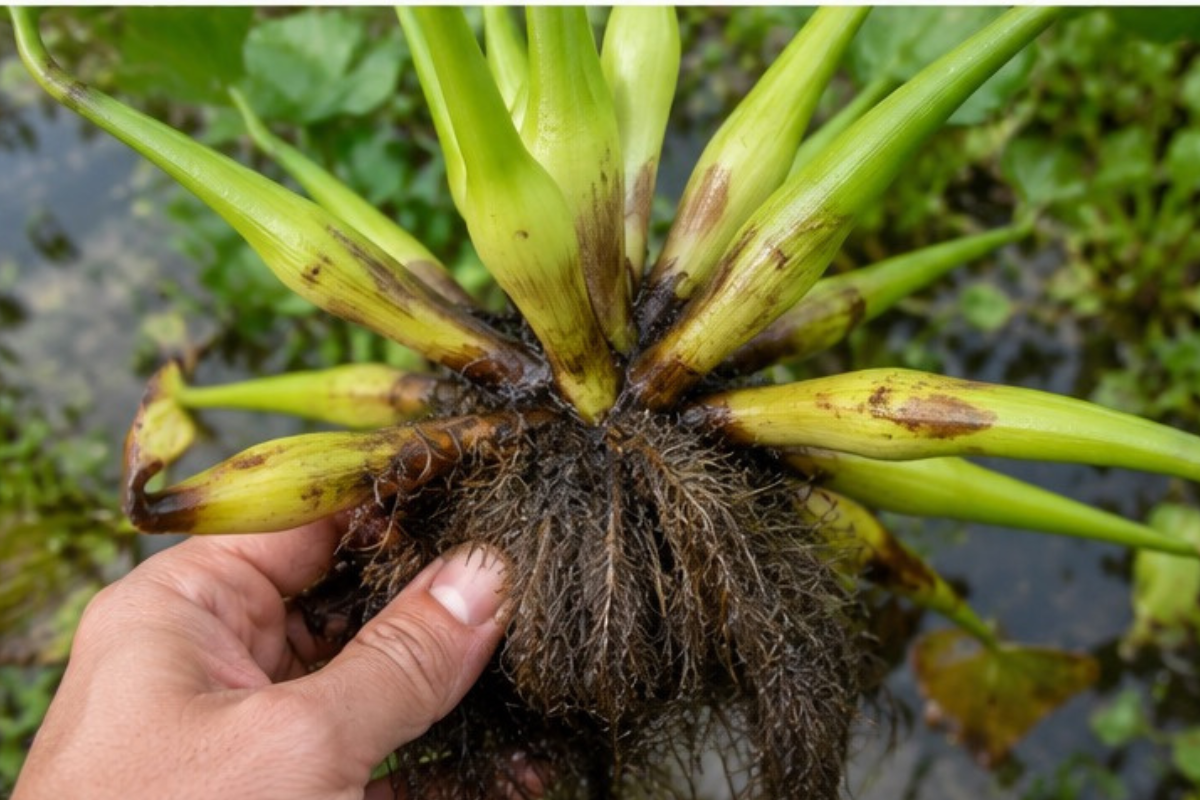
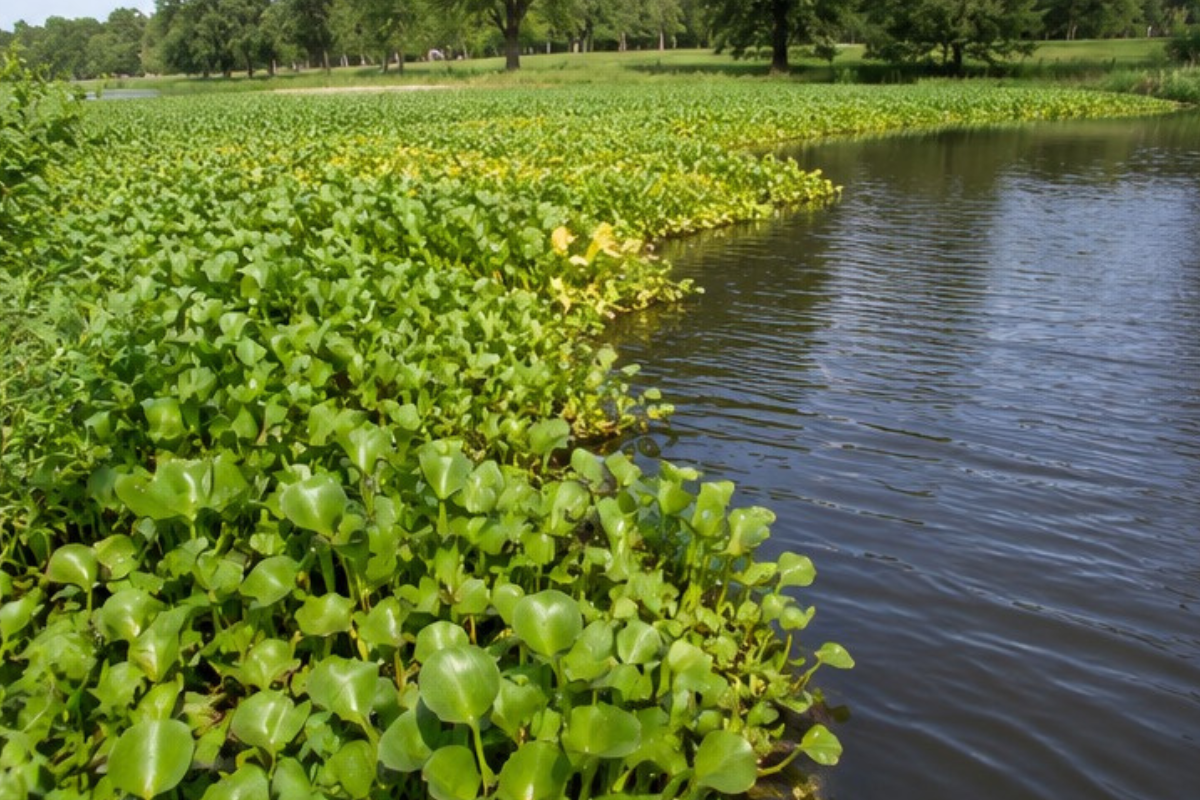
Unlike rooted aquatic weeds, it floats freely on the surface of the water. Each plant continually produces daughter plants through short horizontal runners called stolons. Under warm temperatures and nutrient-rich conditions, these new plants quickly form large floating colonies.
In the Southeast, it’s common for a handful of water hyacinth plants to become hundreds—or even thousands—within a single growing season.
Because the plants float freely, wind can push entire mats across a pond where they continue expanding into new areas. Heavy rains and flooding can also carry water hyacinth into neighboring ponds and lakes, allowing new infestations to become established. Once it begins multiplying, it rarely slows down on its own.
Why Water Hyacinth Becomes a Problem
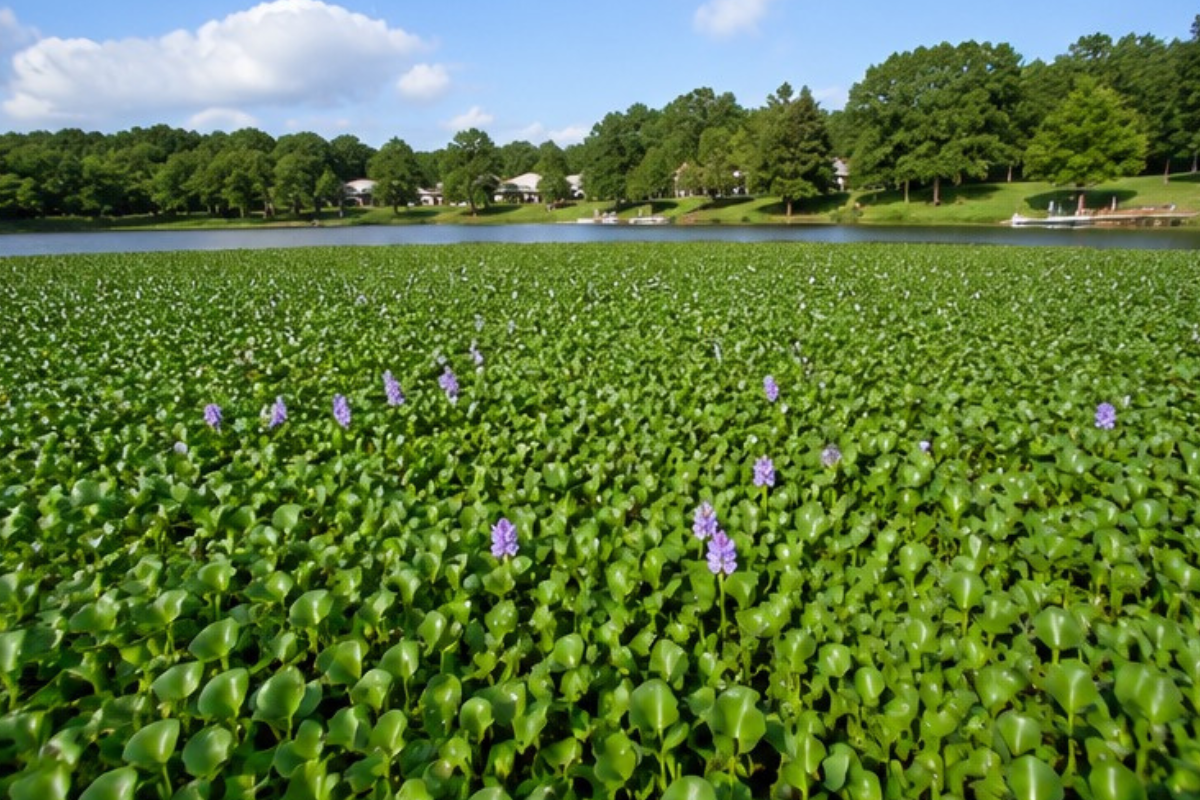
Many pond owners enjoy seeing a few water hyacinth plants along the shoreline, especially when they’re blooming. The problems begin when those isolated plants become dense floating mats.
As it spreads, it forms a thick canopy across the water’s surface that blocks sunlight from reaching below. This limits the growth of beneficial submerged vegetation and reduces photosynthesis throughout the pond. The floating mats also reduce air exchange between the water and the atmosphere, making it more difficult for oxygen to enter the pond naturally. Perhaps the greatest concern comes when large amounts of it begin dying.
As the plants decompose, bacteria consume dissolved oxygen from the water. During hot summer weather—when oxygen levels are already at their lowest—this additional oxygen demand can place tremendous stress on fish populations.
In severe infestations, excessive water hyacinth can contribute to fish kills, especially if the pond experiences several cloudy days or another event that further reduces dissolved oxygen. The dense mats can also trap leaves, grass clippings, and other organic debris, gradually increasing muck accumulation and creating ideal conditions for future weed growth.
Water Hyacinth Reduces More Than Recreation
Most people recognize that excessive water hyacinth makes boating and fishing difficult. Large floating mats clog boat propellers, block access to docks, and make casting nearly impossible in some areas.
However, the recreational impacts are only part of the problem.
Heavy infestations reduce water circulation, shade much of the pond, and alter the entire aquatic ecosystem. Native aquatic plants struggle to compete for sunlight, while fish lose access to open water needed for feeding and movement. Over time, the pond becomes less productive, both biologically and recreationally.
Why Early Water Hyacinth Management Is So Important
One of the biggest mistakes pond owners make is waiting until water hyacinth covers half the pond before taking action.
Because the plant reproduces so quickly, a small infestation is far easier—and much less expensive—to manage than a pond completely covered with floating vegetation. Early treatment also allows pond managers to remove the problem before significant oxygen depletion becomes a concern.
At TLC Perfect Pond, we often recommend addressing any issues while the plants are still scattered throughout the pond instead of waiting until they form continuous mats.
Managing Water Hyacinth Safely
Although water hyacinth is a floating plant, effective treatment still requires careful planning. Treating an entire pond with herbicides at one time can create its own problems. As large amounts of vegetation die simultaneously, decomposition begins immediately, consuming dissolved oxygen throughout the pond.
For this reason, extensive infestations are often treated in stages. By removing portions of the floating vegetation over time, oxygen levels remain much more stable while the pond gradually returns to a healthier balance. Long-term management also includes identifying why the infestation became so severe in the first place.
Water hyacinth thrives in nutrient-rich water. Fertilizer runoff, livestock access, decaying organic matter, and other nutrient sources can all fuel rapid growth. Addressing these underlying issues helps reduce the likelihood of future outbreaks.
Keeping Water Hyacinth Under Control
Like many aquatic plants, water hyacinth isn’t necessarily a problem when only a few plants are present. The trouble begins when those few plants are allowed to multiply unchecked. Routine monitoring and early intervention are the best tools for preventing costly infestations.
At TLC Perfect Pond, our goal is never to create a sterile pond free of all vegetation. Instead, we focus on maintaining the proper balance between healthy aquatic habitat and open water. By managing water hyacinth before it dominates the pond, we can help preserve water quality, protect fish populations, and keep your pond enjoyable for fishing, boating, and wildlife for years to come. If you’re in South Georgia or North Florida and need help managing excessive vegetation in your pond, contact us here to schedule a time to meet and address any issues you’re having with your pond or lake.