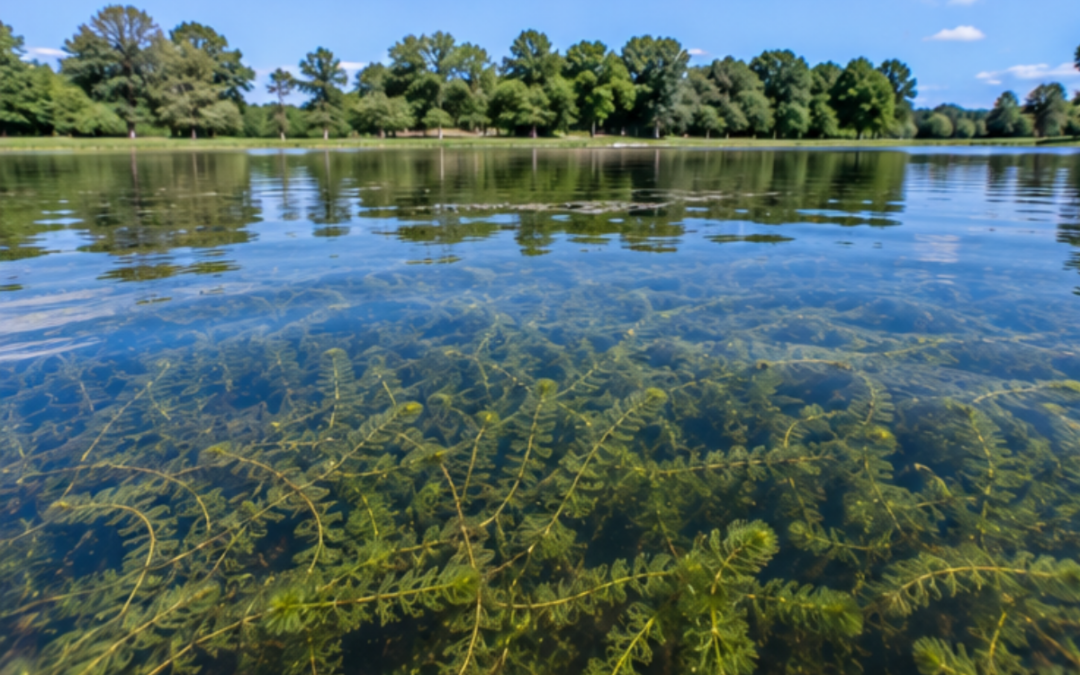
Coontail is one of those aquatic plants that can be both beneficial and problematic in a fishing pond.
When present in moderate amounts, it provides excellent habitat for small fish, aquatic insects, and other organisms that contribute to a productive fishery. But when conditions allow it to grow excessively, thick beds can occupy large portions of a pond, make fishing difficult, and interfere with the balance of aquatic vegetation.
At TLC Perfect Pond, we don’t consider the presence of coontail an automatic problem. The important question is how much is growing and what effect it is having on the pond.
What Is Coontail?
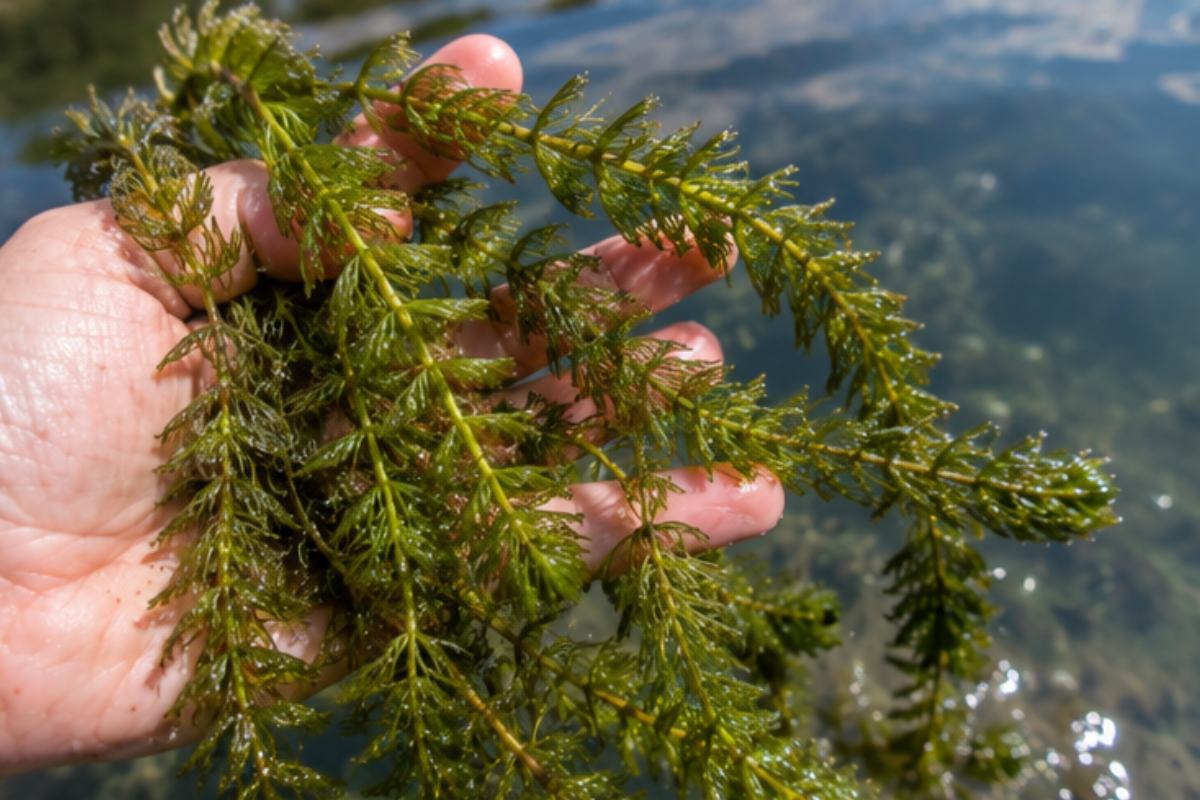
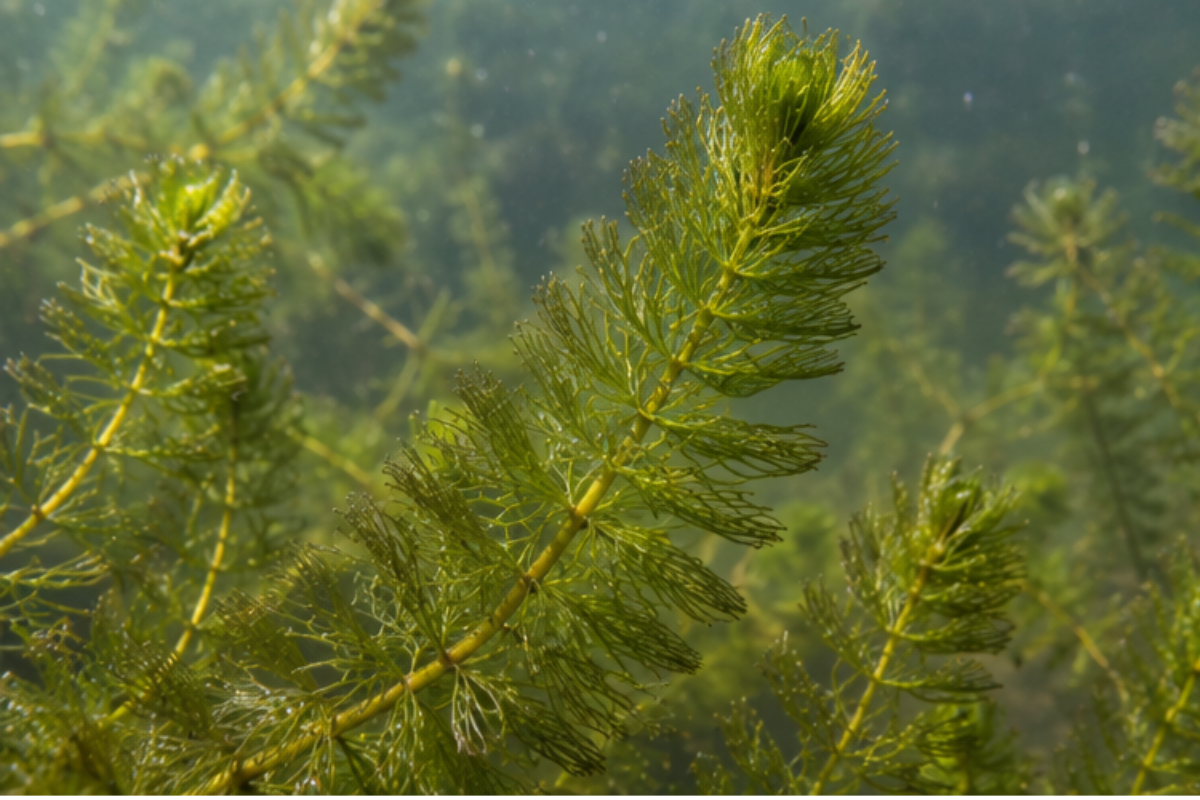
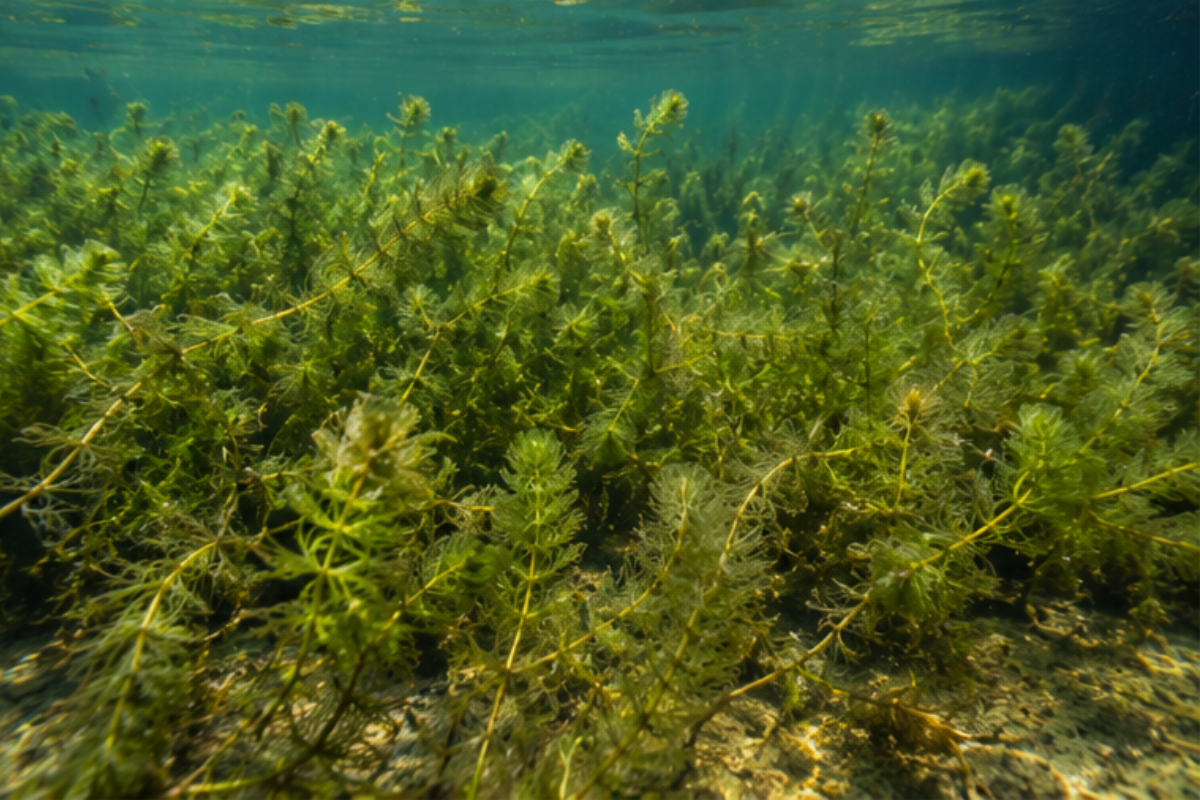
Coontail is a submerged aquatic plant that grows almost entirely beneath the water’s surface. Its scientific name is Ceratophyllum demersum, although most pond owners simply know it as coontail. The name comes from the appearance of its leaves. They grow in dense whorls around the stem, and the tips of mature plants can resemble a raccoon’s tail.
Unlike many submerged pond weeds, coontail doesn’t produce true roots that anchor it into the pond bottom. Plants may become loosely attached or tangled with bottom material, but coontail can also grow freely in the water column. Individual stems can become several feet long and intertwine with neighboring plants to create large underwater beds.
Is Coontail Good for a Fishing Pond?
In reasonable amounts, absolutely.
It creates complex underwater structure that provides cover for bluegill, minnows, young bass, and other small fish. Aquatic insects and other invertebrates also live among the vegetation, providing additional food for fish. Predatory fish such as largemouth bass can use the outside edges of coontail beds as ambush points.
This is why eliminating every patch of aquatic vegetation usually isn’t the goal of good pond management. A pond containing some vegetation can provide significantly more habitat than one with a completely bare bottom. The problem occurs when it stops being scattered habitat and starts becoming the dominant feature of the pond.
What Happens When Coontail Takes Over?
Because it grows beneath the surface, an infestation can become substantial before a pond owner realizes how much vegetation is actually present. Dense beds can eventually fill much of the water column in shallow portions of a pond. This makes fishing difficult because hooks and lures constantly become tangled in vegetation. Thick growth can also interfere with swimming, boating, and shoreline access.
From a fish-management standpoint, excessive vegetation can change predator-prey relationships. Some cover helps forage fish survive. Too much cover, however, can make it difficult for bass and other predators to effectively reach those forage fish. That can affect the balance of the fish population. Overly dense patches can also compete with other aquatic plants for sunlight, nutrients, and space, reducing plant diversity.
Coontail and Dissolved Oxygen
Like other aquatic plants, living coontail produces oxygen during daylight through photosynthesis and consumes oxygen through respiration. The larger concern occurs when excessive vegetation begins dying.
Bacteria consume dead plant material, and that decomposition process requires oxygen. If a large quantity of coontail dies at once—whether naturally or following treatment—the resulting oxygen demand can significantly reduce dissolved oxygen levels. That risk becomes particularly important during hot Southern summers because warm water naturally holds less dissolved oxygen.
For a pond with a major infestation, treating all of the vegetation at once may therefore create unnecessary risk. Treating portions of the pond in stages can allow decomposing vegetation to break down without creating such a large oxygen demand at one time.
Coontail vs. Hydrilla vs. Watermilfoil
Coontail is frequently confused with hydrilla and watermilfoil because all three are submerged plants capable of forming large underwater beds. There are some useful differences.
Coontail has stiff, forked leaves arranged in whorls around the stem, with especially dense growth near the tips. Because it lacks true roots, it may also be found floating freely.
Hydrilla usually has pointed leaves arranged around the stem, often with noticeable serrations along the leaf edges. It is rooted and can produce underground tubers that help make it particularly difficult to eliminate.
Watermilfoil has a much softer, feather-like appearance. Its leaves are finely divided into numerous thin segments, giving the plant a delicate appearance underwater.
Correct identification matters because plants that look similar don’t necessarily respond to the same management techniques.
Managing Excessive Coontail
There isn’t one management method that’s appropriate for every pond. The amount of vegetation, pond depth, water quality, fish population, time of year, and intended use of the pond should all be considered before deciding how aggressively to control it.
Aquatic herbicides can be used to manage excessive coontail when appropriate, but product selection, application method, and timing matter. Biological control may also be an option in some ponds. Triploid grass carp consume coontail, although their effectiveness depends on stocking density, availability of other vegetation, and other pond conditions. Grass carp regulations also vary by state.
Whatever method is used, the objective shouldn’t automatically be complete elimination.
Finding the Right Balance
Coontail demonstrates an important principle of pond management: good habitat can become too much habitat. A moderate amount can provide valuable cover, support aquatic insects, and create productive areas for fishing. But when coontail begins filling large portions of the water column, those benefits can turn into management problems.
At TLC Perfect Pond, aquatic vegetation management starts with identifying the plant, determining how much of it the pond actually needs, and developing a strategy that protects both water quality and the fishery. The goal isn’t a pond without vegetation. It’s a pond with the right amount of the right vegetation.
If you’re in South Georgia or North Florida and need help managing excessive vegetation in your pond, contact us here to schedule a time to meet and address any issues you’re having with your pond or lake.