Alligatorweed is a common problem in ponds, lakes, canals, and other waterways throughout the South. At first, a small patch growing along the shoreline may not look particularly concerning. But given the right conditions, it can spread aggressively, forming dense mats that extend from the bank and eventually cover significant portions of the water.
At TLC Perfect Pond, our goal with aquatic vegetation management isn’t necessarily to eliminate every plant. Some vegetation provides valuable fish and wildlife habitat. The problem with alligatorweed is its ability to spread rapidly and crowd out other, more desirable plants.
Once established, controlling it can become much more difficult, making early identification and management especially important.
What Is Alligatorweed?
Alligatorweed is an invasive perennial plant that can grow both on land and in water. Around ponds, it commonly begins along shallow shorelines before extending outward across the water.
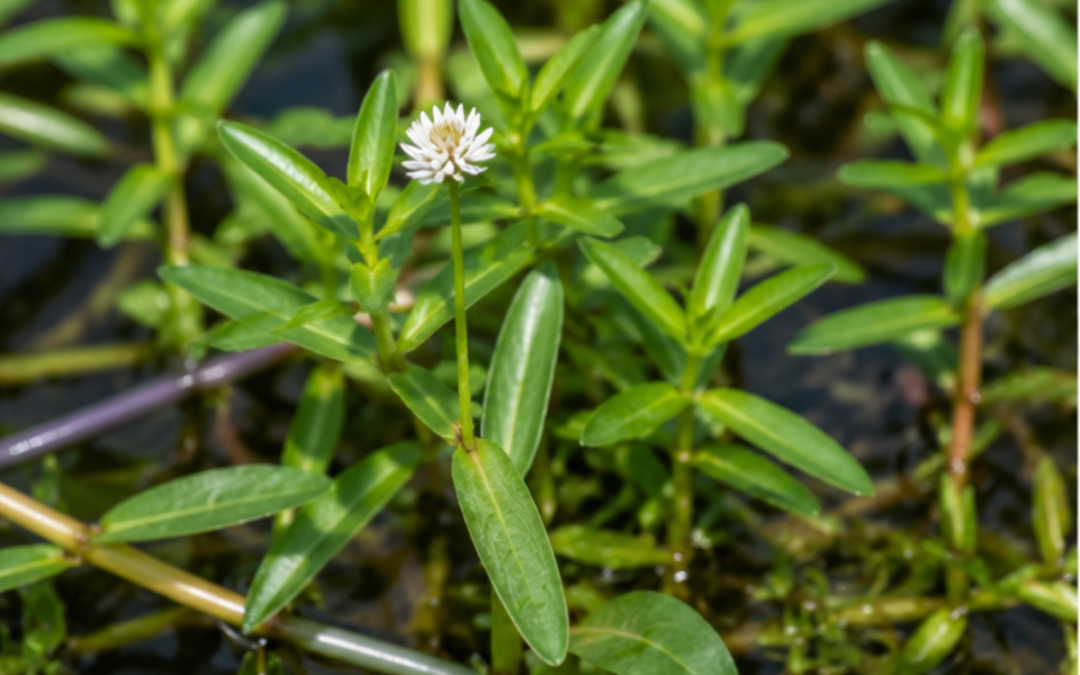
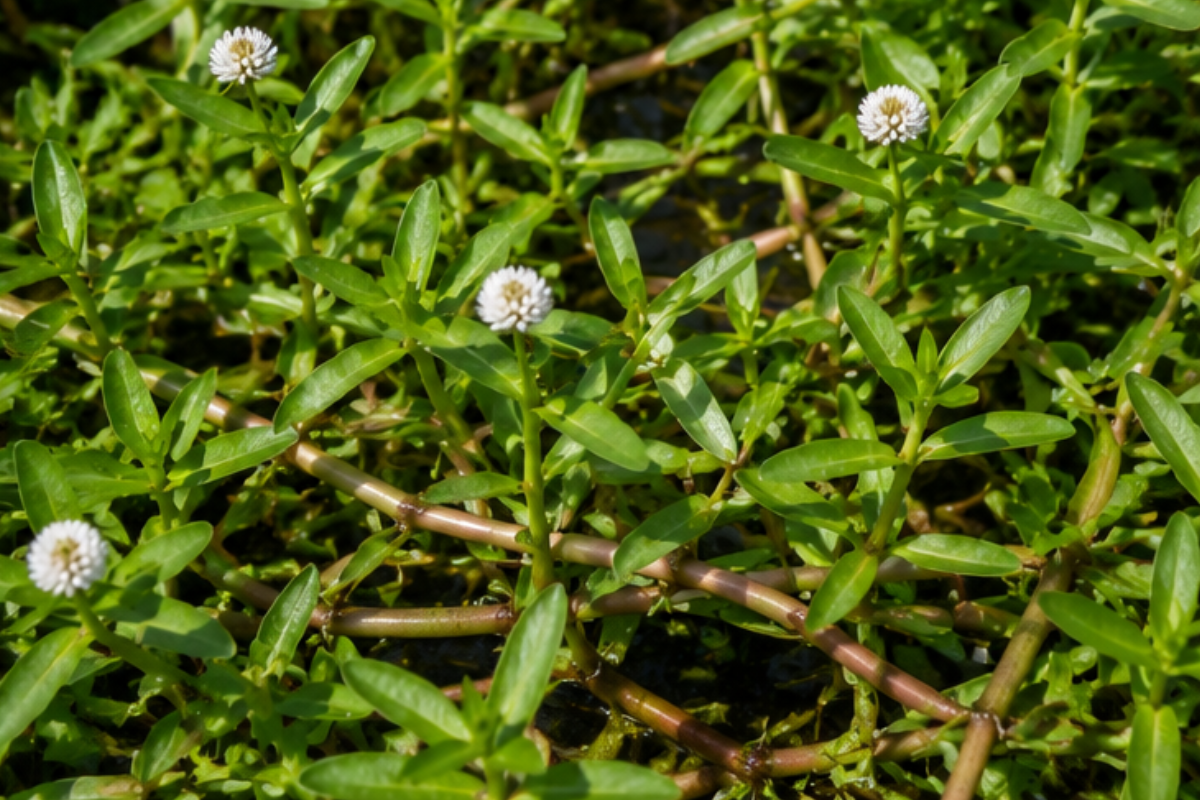
The plant has long, hollow stems with smooth, opposite leaves. During the growing season, it also produces small, white, clover-like flowers that make mature plants relatively easy to identify.
Although the stems may appear to be floating on the surface, it often forms a dense network of vegetation connected to the shoreline or rooted in shallow areas.
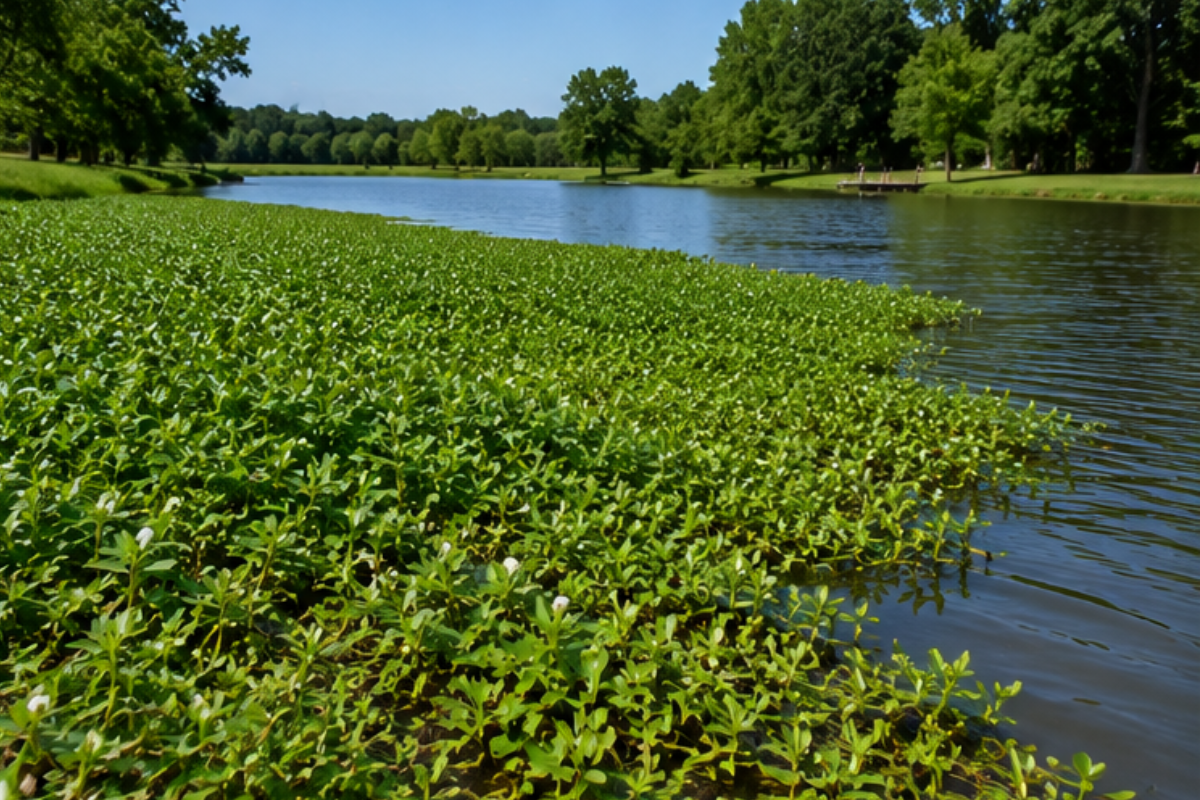
Those floating mats can become surprisingly thick and extend considerable distances into a pond.
Why Alligatorweed Spreads So Quickly
One reason alligatorweed is so difficult to manage is its ability to spread from plant fragments.
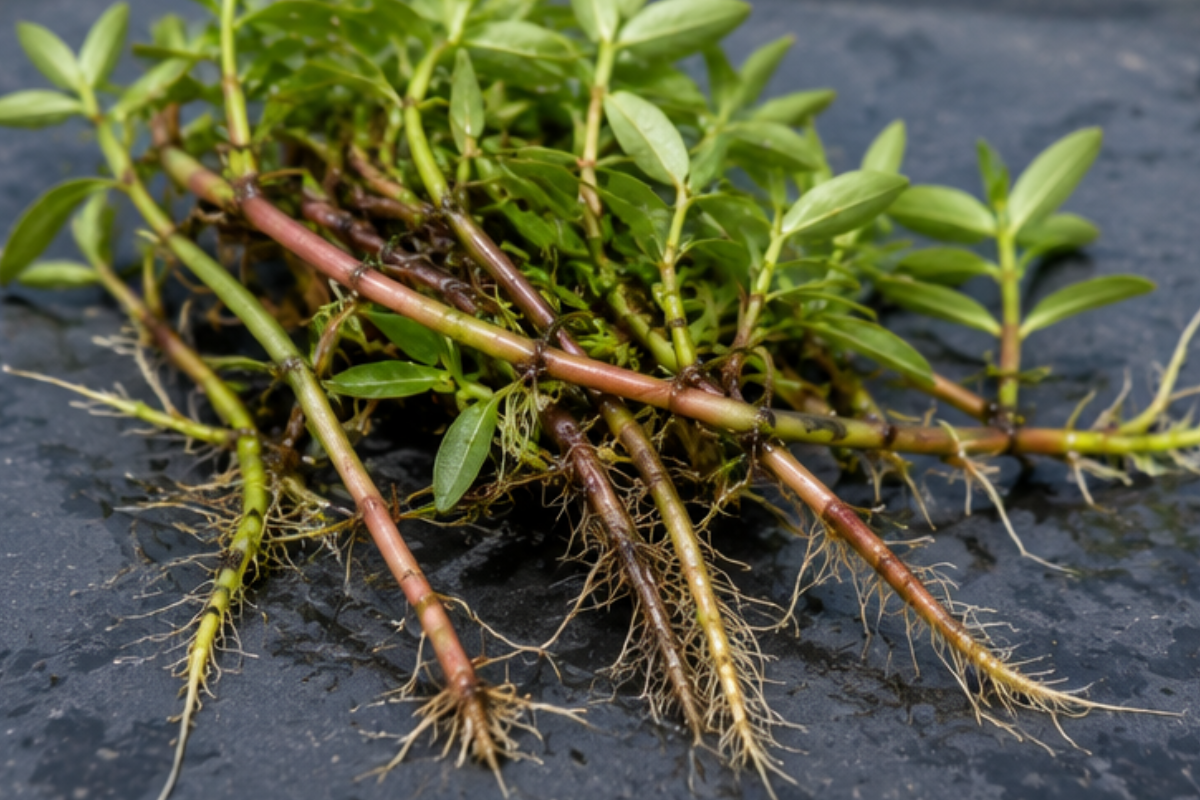
The plant primarily spreads vegetatively. Pieces of stems can break away from an existing colony, float to another location, and establish new growth. That means mowing, cutting, boat traffic, flooding, or other disturbances can potentially move viable fragments around a pond or into neighboring waterways.
Once established, the plant produces an extensive network of stems and roots.
In the warm Southern climate, it can grow rapidly throughout much of the year. A patch that seems relatively harmless one season can become a significant infestation if allowed to grow unchecked.
What Does Excessive Alligatorweed Do to a Pond?
The most obvious problem with alligatorweed is the amount of surface area it can occupy.
Thick mats can make fishing difficult, interfere with boat access, block shorelines, and make it harder to use docks and other recreational areas.
But the problems go beyond recreation.
Dense growth shades the water underneath and competes with native vegetation for space and sunlight. As it expands, it can reduce plant diversity and create a nearly continuous mat along shallow portions of a pond.
These mats can also slow water movement and collect leaves, sediment, and other organic material.
Eventually, portions of the vegetation die and begin decomposing. Bacteria breaking down that organic matter consume dissolved oxygen. When large amounts of vegetation decompose at once—particularly during hot summer weather—the additional oxygen demand can stress fish and contribute to poor water quality.
This is why simply allowing alligatorweed to cover large portions of a pond isn’t a good long-term management strategy.
Can Biological Control Help Manage Alligatorweed?
One interesting characteristic of alligatorweed management is that an effective biological control does exist: the alligatorweed flea beetle.
These small insects feed specifically on alligatorweed. Both adults and larvae damage the plant, and under the right conditions, flea beetle populations can significantly suppress an infestation.
Biological control has been particularly successful in warmer climates where flea beetle populations can become established and remain active for long periods.
However, biological control isn’t always a complete solution.
Cold winter temperatures can reduce flea beetle populations, and their effectiveness can vary depending on location and environmental conditions. The insects may suppress alligatorweed without completely eliminating it, allowing the plant to rebound when conditions become favorable again.
For pond owners, biological control can therefore be a useful management tool, but it shouldn’t automatically be considered a replacement for monitoring and other control methods.
Why Alligatorweed Treatment Requires a Strategic Approach
Treating alligatorweed effectively requires getting herbicide into the actively growing vegetation.
Because mature infestations form dense floating mats, simply spraying the uppermost leaves may not always provide adequate control throughout the entire colony. Treatment methods and products need to be selected based on the size, density, and location of the infestation.
Timing also matters.
Treating smaller patches early in the growing season is generally much easier than waiting until alligatorweed has formed massive mats across the pond.
And as with other excessive aquatic vegetation, killing huge amounts of alligatorweed at once can create problems of its own. Large quantities of decomposing vegetation can consume dissolved oxygen, so severe infestations may require staged treatments instead of trying to eliminate everything in one application.
Managing Alligatorweed Before It Takes Over
Alligatorweed is a perfect example of why early aquatic vegetation management matters.
A few plants along the shoreline can quickly become a much larger problem. Once thick mats become established, controlling the infestation requires considerably more effort than addressing it early.
At TLC Perfect Pond, we evaluate the amount of alligatorweed present, the overall condition of the pond, and the potential impact of treatment before developing a management strategy.
The goal isn’t simply to spray weeds. It’s to maintain a healthy balance of vegetation, open water, good water quality, and productive fish habitat.
By identifying alligatorweed early and using the appropriate combination of management techniques, pond owners can prevent this aggressive Southern aquatic weed from taking over their pond. If you’re in South Georgia or North Florida and need help managing excessive vegetation in your pond, contact us here to schedule a time to meet and address any issues you’re having with your pond or lake.