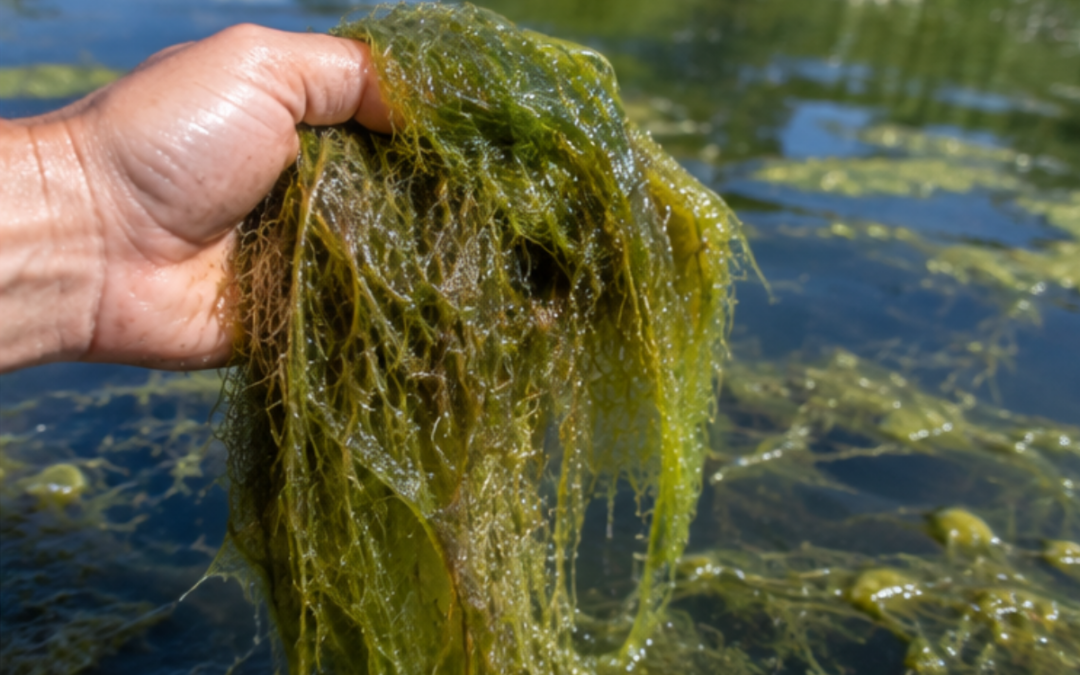
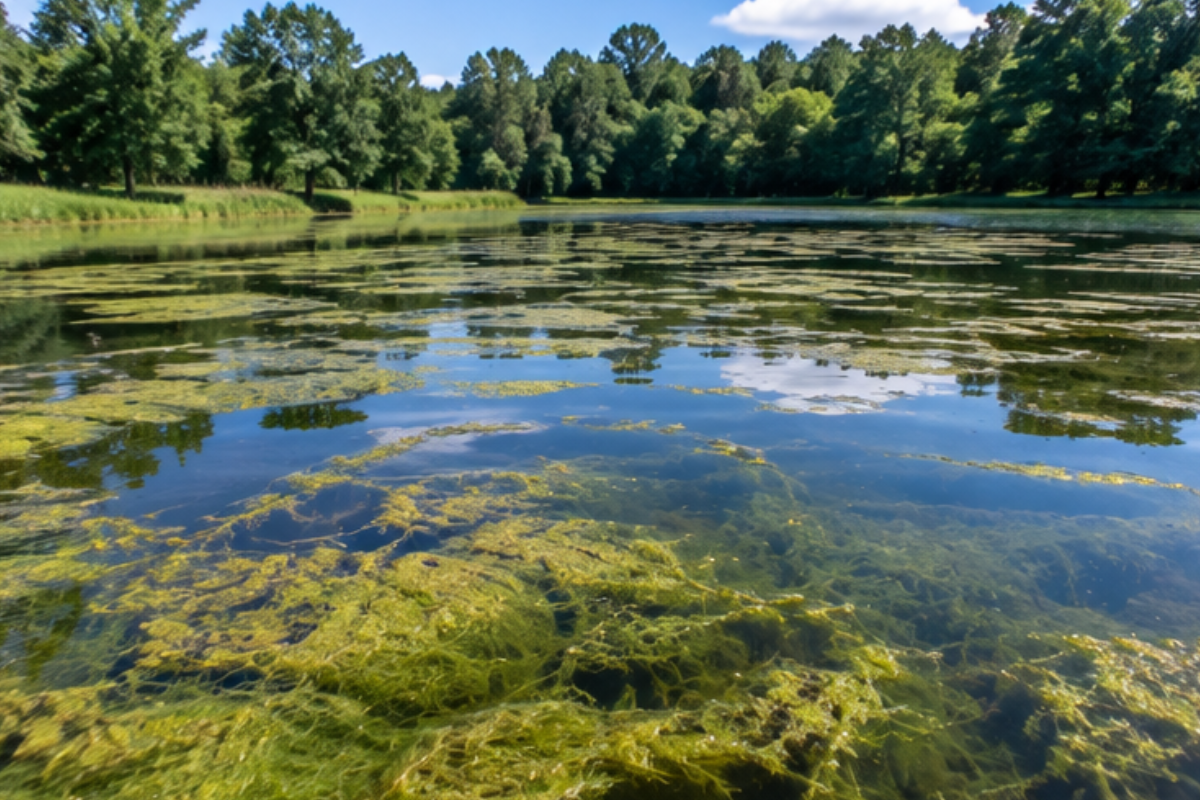
If you’ve owned a pond for very long, you’ve probably encountered what many pond owners call “pond moss.” It starts as green growth beneath the surface, then eventually floats upward and forms thick, slimy mats across the pond.
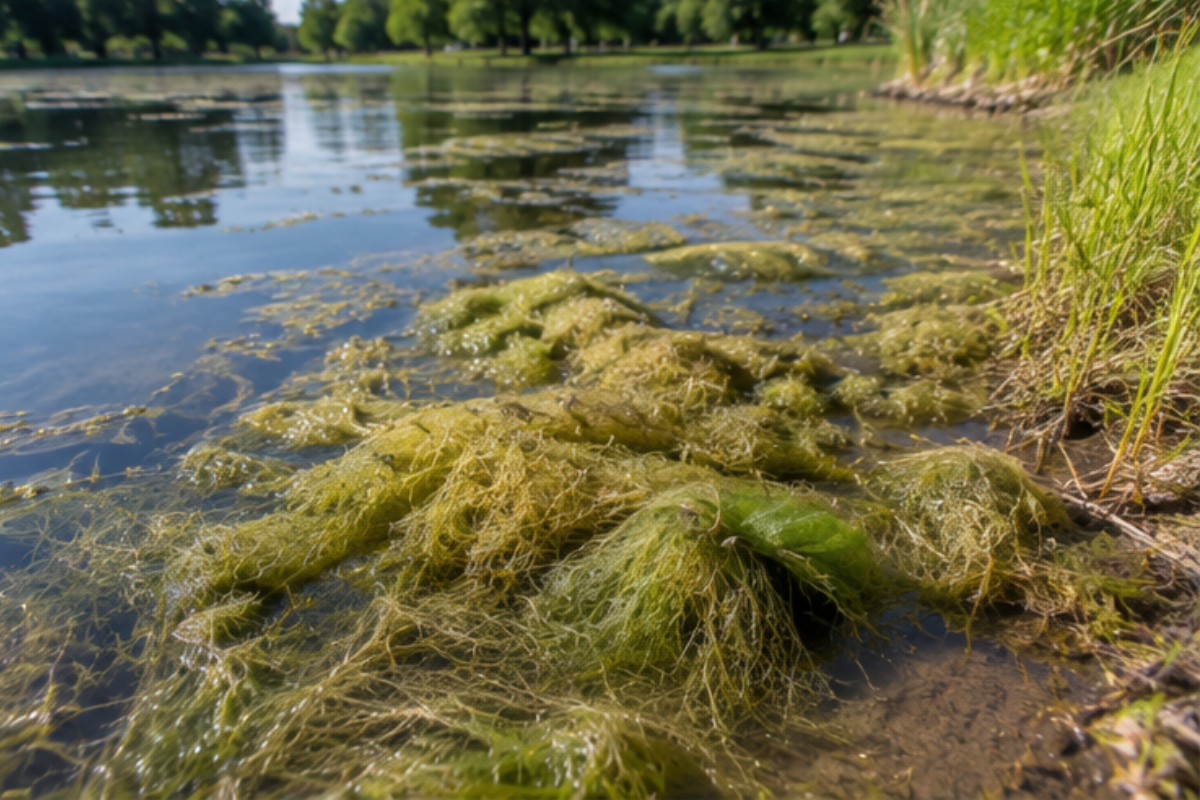
Despite the common name, pond moss usually isn’t moss at all. In many cases, it’s filamentous algae, one of the most common nuisance growths we encounter in Southern ponds.
At TLC Perfect Pond, we don’t consider all algae a bad thing. Microscopic algae, or phytoplankton, forms the base of a productive pond food chain. Filamentous algae is different. When excessive growth develops, it can interfere with fishing and recreation, affect water quality, and signal that something in the pond may be out of balance.
What Is Filamentous Algae or “Pond Moss”?
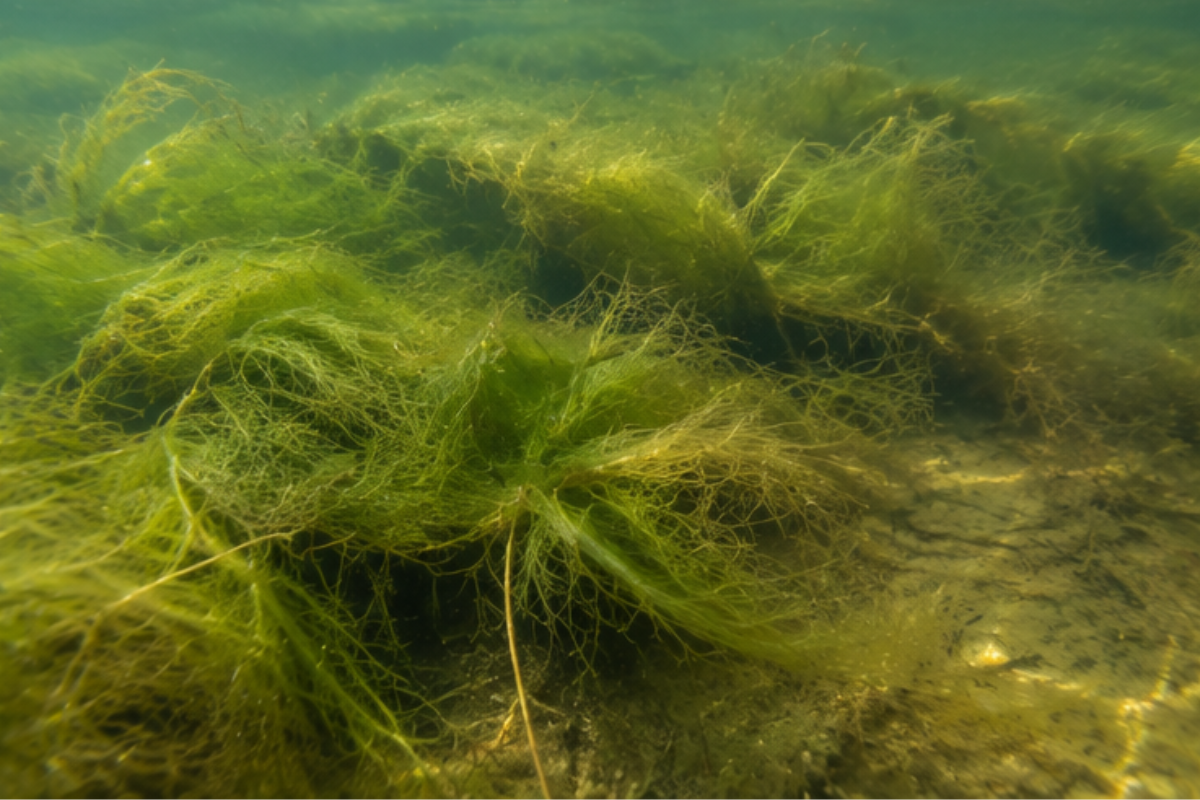
Filamentous algae grows in long strands that intertwine to form dense mats. It often begins growing along the pond bottom in shallow water where sunlight can easily penetrate.
As the algae produces oxygen through photosynthesis, bubbles can become trapped within the mat. Eventually, sections break loose from the bottom and float to the surface. That’s when pond owners typically notice large green mats around shorelines or scattered across the pond.
If you grab a handful, it often feels stringy, slimy, or almost like wet hair. Several types of filamentous algae can occur in ponds, but from a management standpoint, the bigger question is usually why so much of it is growing in the first place.
What Causes Pond Moss to Grow?
Filamentous algae needs three basic things: sunlight, nutrients, and suitable temperatures. Southern ponds usually have plenty of sunlight and warm weather, so nutrient availability often becomes an important piece of the puzzle.
Nitrogen and phosphorus enter ponds from many sources. Fertilizer runoff, livestock waste, fish feed, leaves, grass clippings, decaying aquatic vegetation, and other organic material can all contribute nutrients.
As organic material accumulates and decomposes, some of those nutrients become available for future plant and algae growth. Shallow, clear water can make the situation worse because sunlight reaches more of the pond bottom. This creates a larger area where filamentous algae can become established.
That’s why repeatedly treating the visible algae without considering the conditions encouraging its growth may only provide temporary relief.
Why Excessive Pond Moss Can Become a Problem
A little filamentous algae isn’t necessarily a pond emergency. Problems arise when thick mats begin covering significant portions of the water.
From a recreational standpoint, excessive pond moss makes fishing frustrating. It collects on hooks and lures, interferes with swimming, and can accumulate around docks and shorelines.
But there are biological concerns as well. Large algae mats can create dramatic swings in dissolved oxygen. Algae produces oxygen when sunlight is available, but algae and other organisms continue consuming oxygen through respiration when photosynthesis stops at night.
Heavy algae growth can therefore contribute to larger day-to-night oxygen fluctuations. The bigger concern often comes when a large algae bloom dies. Bacteria begin decomposing all that dead organic material, and the decomposition process consumes dissolved oxygen.
If enough algae dies simultaneously—especially during hot summer weather—oxygen can fall to dangerous levels and potentially contribute to a fish kill.
Why Killing All the Pond Algae at Once Can Be Dangerous
When a pond is covered with filamentous algae, the natural reaction is to want it all gone immediately. That isn’t always the safest approach.
Treating a massive algae infestation at one time can suddenly create a huge amount of dead organic matter. As that material decomposes, the resulting oxygen demand can place fish under significant stress. For severe infestations, it may be better to treat the pond in sections, allowing time between treatments rather than killing everything simultaneously.
Water temperature, existing dissolved oxygen, the percentage of the pond covered, weather conditions, and the amount of other vegetation present should all factor into a treatment strategy. This is why aquatic vegetation management involves more than simply choosing an algaecide and spraying.
Controlling Pond Moss Starts With the Bigger Picture
Algaecides can be valuable tools for controlling filamentous algae, but killing existing growth doesn’t remove the nutrients that helped create it. Long-term management should also consider where those nutrients are coming from.
Reducing unnecessary fertilizer runoff, limiting organic debris entering the pond, properly managing fish feeding, and addressing excessive muck accumulation can all be parts of a broader management strategy.
In some ponds, maintaining an appropriate phytoplankton bloom can also help limit how deeply sunlight penetrates the water, reducing the amount of pond bottom where nuisance vegetation and pond moss can grow.
Managing Filamentous Algae for a Healthier Pond
The goal at TLC Perfect Pond isn’t necessarily to make every pond completely free of pond moss. A productive pond is a living ecosystem, and algae plays an important role in that system.
The problem is excessive filamentous algae.
When “pond moss” begins covering large portions of your pond, the best solution isn’t simply to kill everything as quickly as possible. Proper management means identifying why the algae is thriving, safely reducing excessive growth, and addressing the conditions that are allowing it to return.
That approach provides much better long-term results—and helps maintain the healthy, productive fishery that pond owners ultimately want. If you’re in South Georgia or North Florida and need help managing excessive vegetation in your pond, contact us here to schedule a time to meet and address any issues you’re having with your pond or lake.