
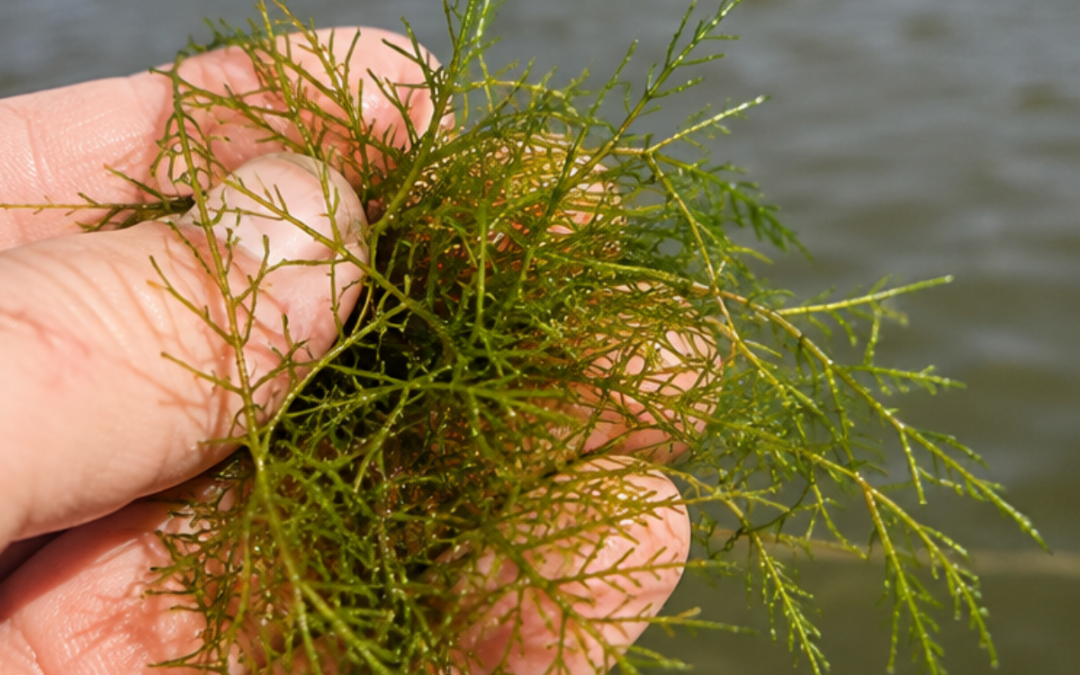
Not every aquatic plant growing in your pond is a weed that needs to be eliminated. In fact, some underwater vegetation plays an important role in maintaining a healthy fishery. One plant that often sparks questions from pond owners is chara, also known as muskgrass.
At TLC Perfect Pond, we frequently encounter chara during pond management projects. Unlike invasive plants that can quickly dominate a pond, chara is often considered one of the more beneficial aquatic plants. However, just like duckweed, watermilfoil, and other aquatic vegetation, too much chara can eventually create problems that outweigh its benefits.
Understanding when chara is helping your pond—and when it’s beginning to hurt it—is an important part of successful pond management.
What Is Chara (Muskgrass)?
Although many people refer to chara as an aquatic weed, it isn’t actually a true vascular plant. Chara is a large, complex form of algae that grows entirely underwater.
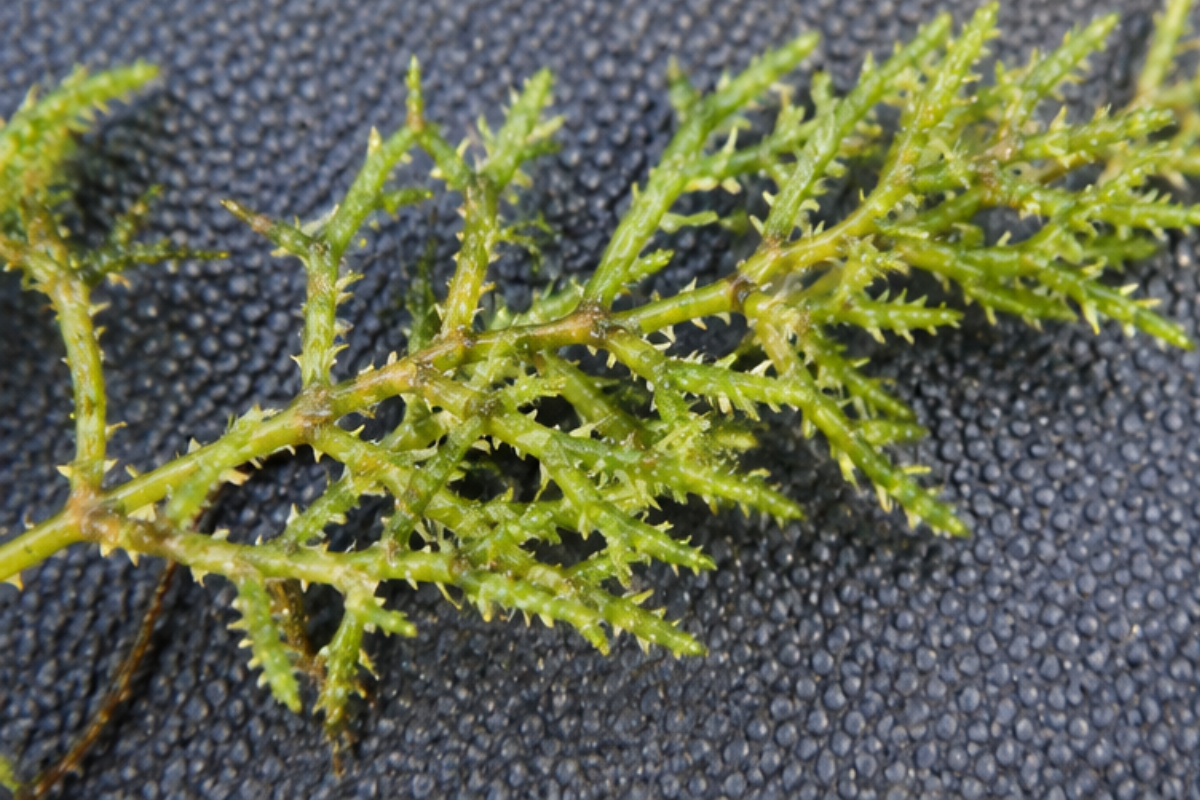
The name muskgrass comes from the strong musky or garlic-like odor it produces when removed from the water. It also feels rough or gritty because it deposits calcium carbonate on its surface as it grows.
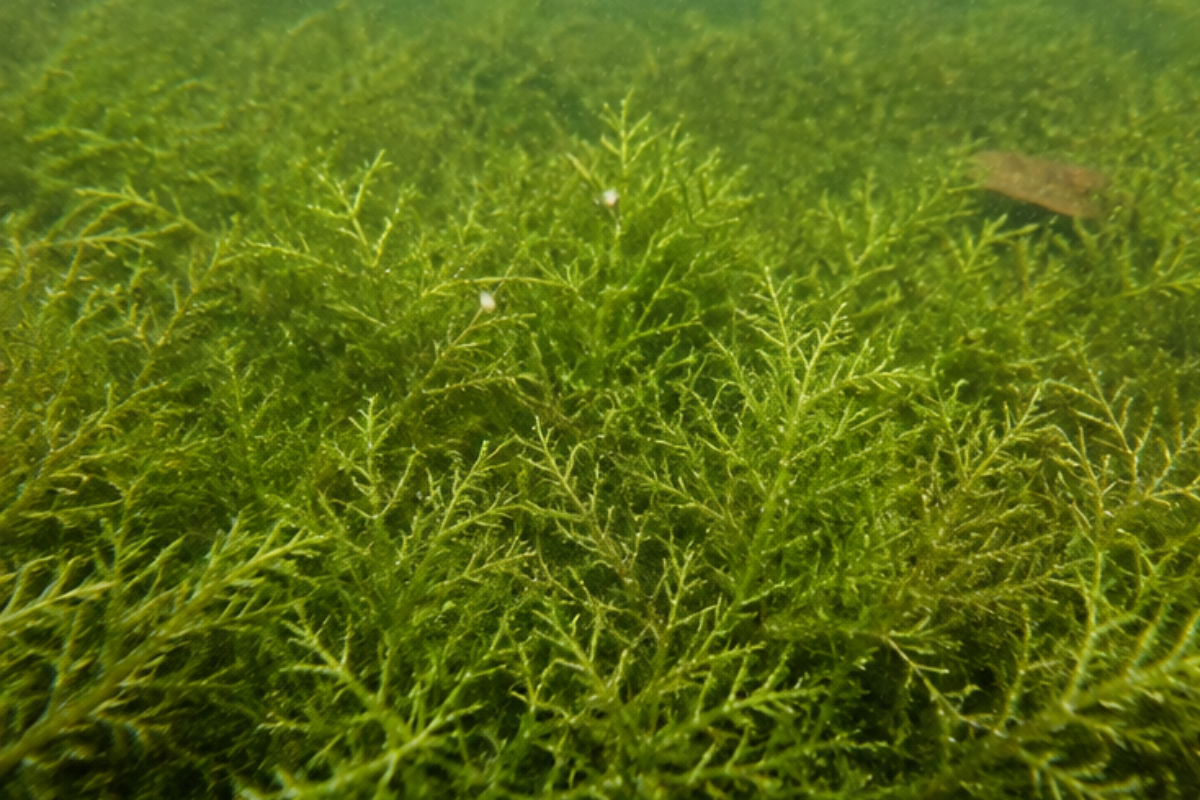
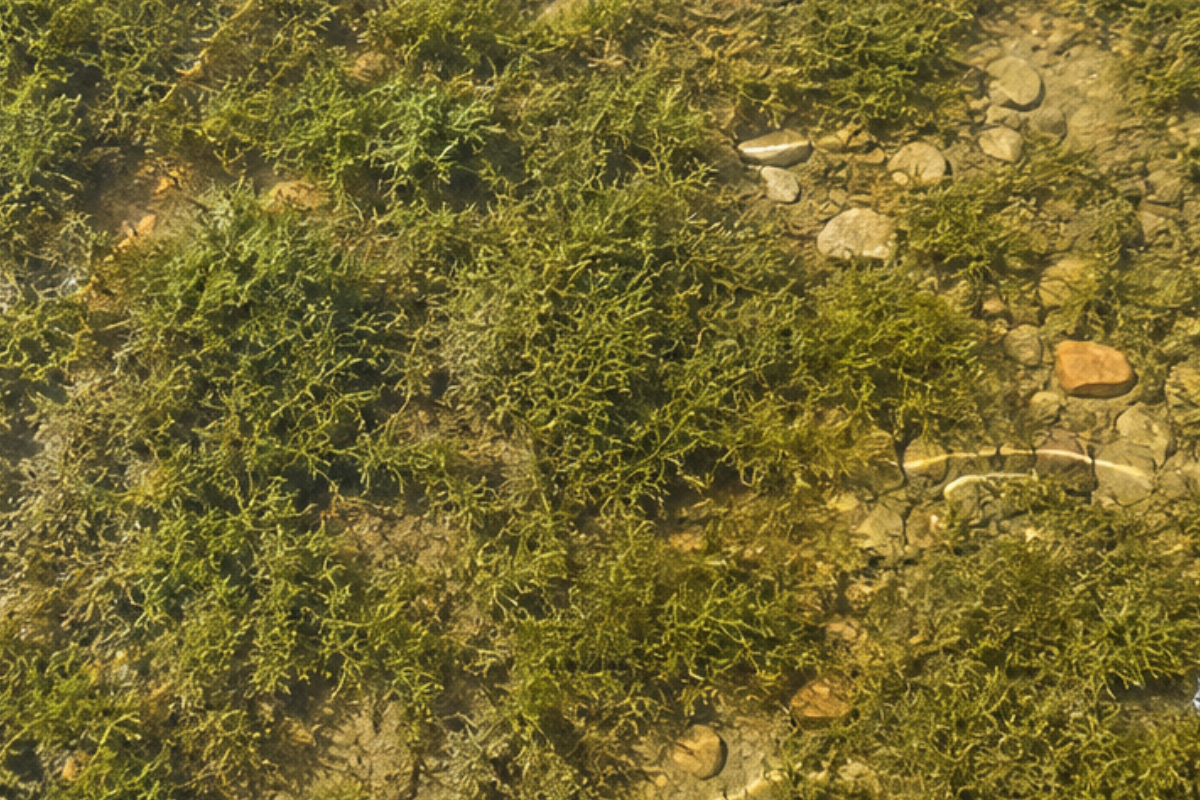
Unlike many nuisance aquatic plants, chara usually grows in dense carpets across the pond bottom rather than reaching high above the water’s surface. Its bright green color and branching structure can resemble submerged plants like coontail or watermilfoil, but its rough texture and distinctive smell make it relatively easy to identify.
Why Chara Can Benefit a Pond
Moderate amounts of chara can actually improve pond health.
Dense patches provide excellent habitat for aquatic insects, small crustaceans, and other organisms that become food for bluegill and other forage fish. Young fish often use chara as protective cover while avoiding predators, and largemouth bass frequently patrol the edges of these underwater beds looking for an easy meal.
Chara also helps stabilize bottom sediments. By covering exposed soil, it reduces the amount of sediment stirred into the water by wind and wave action, helping improve water clarity.
In many healthy ponds, chara is considered one of the more desirable forms of aquatic vegetation.
When Chara Becomes Too Much
Problems begin when chara covers large portions of the pond.
As thick underwater mats continue expanding, they compete with other beneficial aquatic plants for space and sunlight. The dense growth can interfere with casting, snag fishing lures, and make swimming uncomfortable.
While chara generally stays below the water’s surface, extremely heavy growth can become so dense that it restricts water movement in shallow areas and traps leaves, organic matter, and sediment.
Perhaps the biggest concern occurs when large amounts of chara die at the same time.
As bacteria decompose the dead algae, they consume dissolved oxygen from the water. During the heat of summer, when oxygen levels are naturally lower, this additional demand can stress fish populations and increase the risk of fish kills—especially if a pond already contains excessive amounts of other aquatic vegetation.
This is one of the reasons pond management should focus on maintaining balance rather than allowing any single species to dominate.
Why Chara Can Spread So Quickly
Chara thrives in clear water where sunlight easily reaches the pond bottom.
Unlike floating weeds, chara relies on sunlight penetrating the water column, which is why it often becomes established in ponds with excellent water clarity.
It reproduces through specialized reproductive structures and can also spread as small fragments become established elsewhere in the pond. Once favorable conditions exist, chara can gradually expand into large underwater beds over multiple growing seasons.
Ponds with shallow shorelines and abundant sunlight often provide ideal growing conditions.
Why Chara Requires a Different Treatment Approach
Because chara grows entirely beneath the water’s surface, it cannot be effectively managed with the same application techniques used for floating weeds like duckweed.
At TLC Perfect Pond, our herbicide applications are designed to place the treatment directly into the water column where the chara is actively growing. This targeted subsurface application allows the product to contact the algae while minimizing unnecessary treatment of unaffected areas.
Equally important is avoiding large-scale treatments all at once.
If a pond contains extensive chara growth, killing the entire infestation in a single application can result in large amounts of decaying organic matter, causing dissolved oxygen levels to drop rapidly. Instead, treatments are often divided into manageable sections to protect fish populations while gradually restoring a healthier balance.
Managing Chara for Long-Term Pond Health
Our goal is never to remove every bit of aquatic vegetation from a pond.
Healthy fisheries depend on a variety of underwater habitats, and moderate amounts of chara can be an important part of that ecosystem. The key is preventing chara from becoming so abundant that it begins reducing water quality, limiting recreation, or creating oxygen problems.
Through proper identification, targeted subsurface treatments, and a long-term management plan, chara can be kept at beneficial levels while preserving the health and productivity of your pond.
At TLC Perfect Pond, we believe successful pond management is about balance—not eliminating every plant, but creating an environment where fish, wildlife, and people can all enjoy a healthy, thriving pond. If you’re in South Georgia or North Florida and need help managing excessive vegetation in your pond, contact us here to schedule a time to meet and address any issues you’re having with your pond or lake.