

Feeding your bluegill is one of the most effective ways to grow larger fish and maintain a balanced pond ecosystem—but more bluegill feed isn’t always better. Overfeeding can lead to wasted feed, poor water quality, and stressed fish, while underfeeding can slow growth and weaken your pond’s food chain.
At TLC Perfect Pond, we help pond owners fine-tune both their feeding schedule and their bluegill feed quantity to get the best results. With the right adjustments and a little observation, you can make sure every pellet of feed contributes to a stronger, healthier pond.
Why the Right Bluegill Feed Quantity Matters
Your bluegill are the backbone of your pond’s food web. They’re the primary forage fish for bass and are essential for a thriving, balanced ecosystem. Feeding them regularly with a high-quality bluegill feed improves growth, reproduction, and overall fish condition—but the amount you feed is just as important as the quality.
When your bluegill feed quantity is dialed in correctly, you provide enough nutrition for steady growth without upsetting your pond’s natural balance. Too much feed can create waste and algae problems, while too little can lead to slow-growing bluegill and hungry, underweight bass.
A good rule of thumb: your bluegill should consume all the feed within about five to ten minutes. That’s your sweet spot—efficient feeding, healthy fish, and a balanced pond.
What Happens When You Overfeed Bluegill
Overfeeding is one of the most common mistakes pond owners make. It’s easy to assume that adding a little extra bluegill feed will speed up fish growth, but that usually backfires.
Here’s what happens when there’s too much feed in the water:
- Water quality declines. Uneaten feed sinks to the bottom and breaks down, releasing nutrients that can cause algae blooms or oxygen depletion.
- Pond balance shifts. Excess nutrients promote unwanted vegetation and algae growth, which competes with fish for oxygen and can lead to fish kills during hot weather.
- Maintenance needs increase. Overfeeding often leads to cloudy water, excess sludge buildup, and more frequent aeration or chemical treatments.
- Feed is wasted. High-quality feed is an investment, and when it goes uneaten, you’re literally throwing money into the pond.
Too much bluegill feed also disrupts natural pond dynamics. A healthy pond depends on balance—fish, plants, and microorganisms all play a role. Overfeeding overloads that system and can take months to correct.
The Risks of Underfeeding Bluegill
Feeding too little bluegill feed may seem harmless, but it can limit fish growth and upset predator–prey relationships. Bluegill that don’t receive enough nutrition grow slowly, spawn less frequently, and produce fewer offspring.
That shortage of young bluegill can lead to stunted bass populations, as bass struggle to find enough forage. In a well-managed pond, you want abundant, healthy bluegill so your bass have plenty to eat. Keeping your bluegill feed at the right level helps maintain that balance.
How to Adjust Your Feeder for the Perfect Bluegill Feed Amount
The best way to determine how much bluegill feed to use is simple—watch your fish. Every pond is unique, and factors like fish density, water temperature, and feeding behavior will determine how much feed is appropriate.
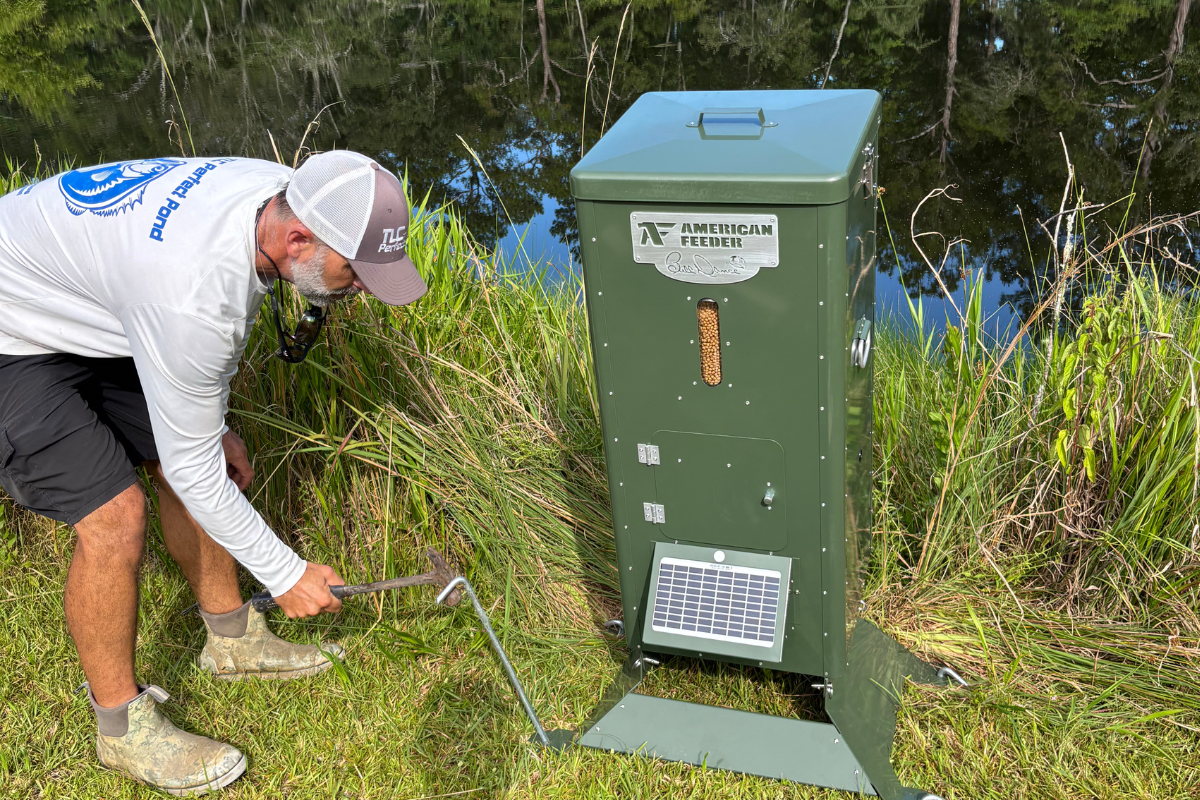
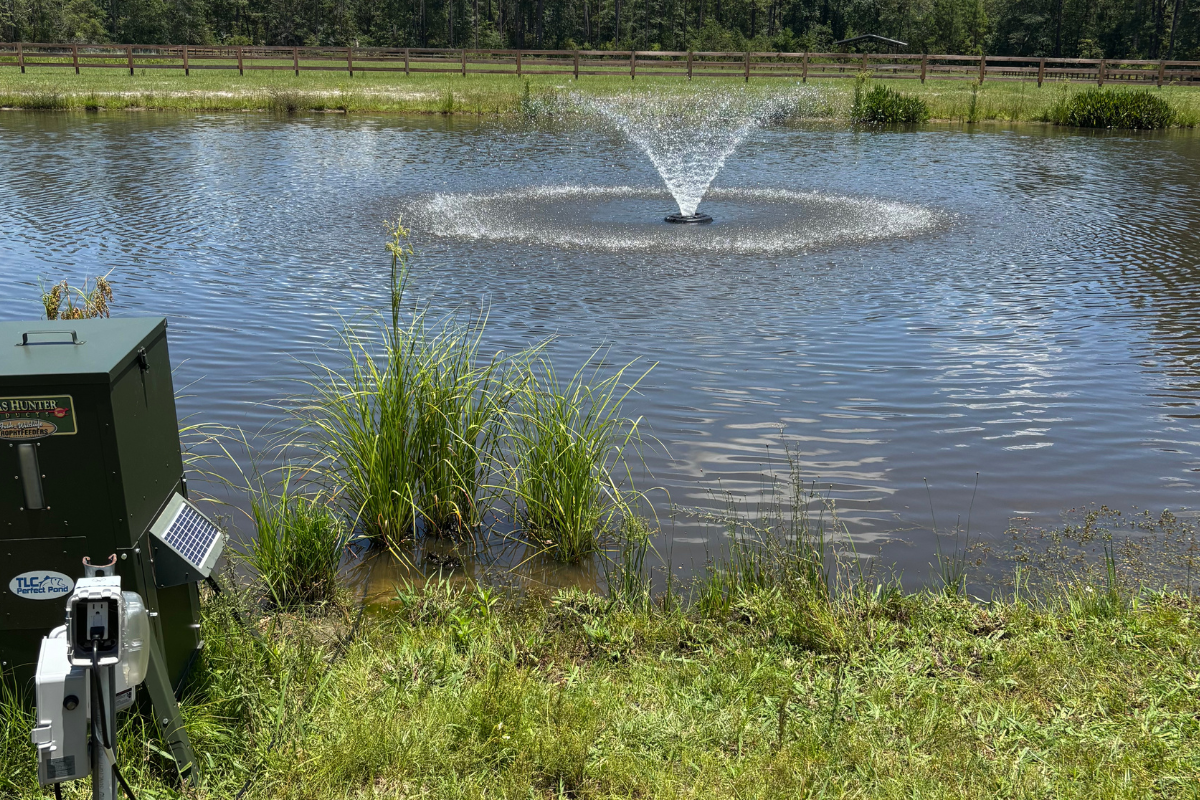
Here’s how to dial in your automatic feeder:
- Start small. Begin with short feeding times (around 2–3 seconds) once or twice a day.
- Observe carefully. Watch the fish during feeding. Ideally, they should eat everything in five to ten minutes with little to no leftover feed.
- Adjust gradually. If the fish finish quickly and continue to feed aggressively, increase the duration slightly. If there’s leftover feed floating afterward, cut the time back.
- Monitor over time. As seasons and temperatures change, so will your fish’s appetite. Continue fine-tuning your bluegill feed quantity every few weeks.
Regular observation not only helps you manage feed more effectively but also gives you an opportunity to monitor fish health and behavior. If you notice fish feeding sluggishly, surfacing irregularly, or ignoring pellets, it may signal low oxygen or changing water conditions.
Why High-Quality Bluegill Feed Matters
Not all bluegill feed is created equal. Cheaper feed from local farm stores may seem like a bargain, but it often contains lower-quality ingredients, fewer nutrients, and less digestible protein. These feeds tend to crumble easily, sink too quickly, and leave behind waste that clouds the water.
That’s why TLC Perfect Pond recommends Cargill Triton feed for serious pond owners. Cargill Triton is engineered specifically for warm-water sport fish like bluegill and bass. It contains the ideal balance of protein, fats, and vitamins for rapid growth and excellent feed conversion efficiency.
Triton feed pellets float longer, hold their shape, and are highly digestible—allowing fish to consume more nutrients with less waste. The result is healthier fish, clearer water, and faster growth without the negative effects of overfeeding. When you invest in high-quality bluegill feed, you’re investing in the long-term health and performance of your pond.
Fine-Tuning Your Pond for Long-Term Success
Maintaining the proper bluegill feed quantity is one of the easiest yet most impactful steps you can take to improve your pond. Consistent, well-managed feeding leads to:
- Stronger, healthier bluegill populations
- Better forage availability for bass
- Improved water clarity and oxygen levels
- Less wasted feed and fewer maintenance issues
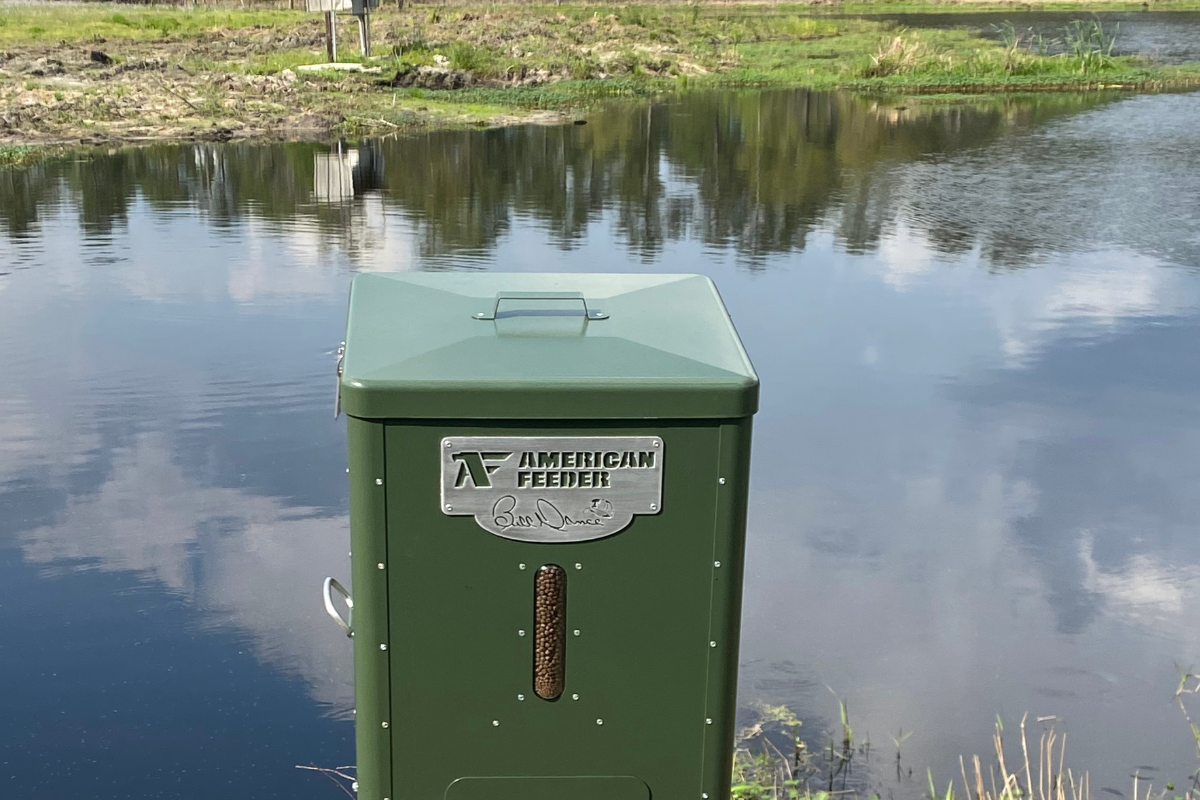
By watching your fish, adjusting your feeder, and choosing a quality feed, you create a self-sustaining environment that stays productive season after season.
Let TLC Perfect Pond Help You Perfect Your Bluegill Feed Program
If you’re unsure how much bluegill feed your pond really needs, the experts at TLC Perfect Pond can help. We offer professional feeder installation, adjustment, and maintenance, along with customized feeding plans that include premium products like Cargill Triton.
We’ll help you determine the right feed rate for your pond’s size, fish population, and seasonal conditions—so every feeding supports cleaner water, faster growth, and a thriving ecosystem.
If you’re in South Georgia or North Florida, contact TLC Perfect Pond today to schedule a feeder check or develop a custom bluegill feed plan designed for your pond’s unique needs. With the right approach, your fish will grow faster, stay healthier, and make your pond more enjoyable all year long.