
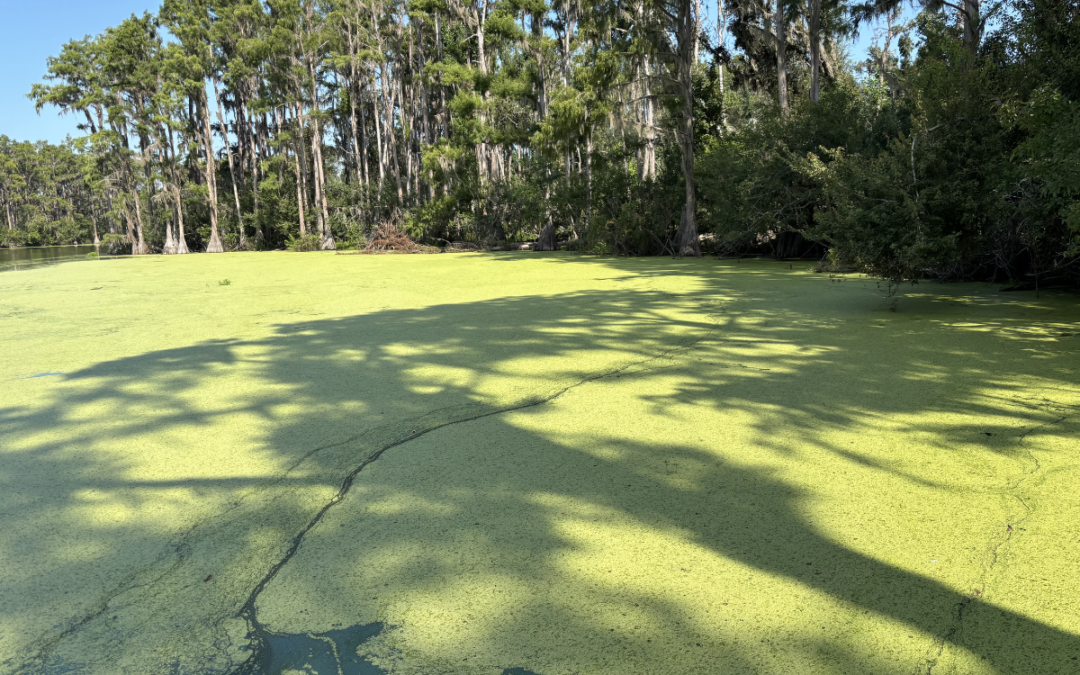
Duckweed is one of the smallest flowering plants in the world, but it can create some of the biggest headaches for pond owners. If you’ve ever watched one of our pond management videos, you’ve probably seen us treating ponds covered in duckweed. We also hear from plenty of anglers who insist that duckweed is great for fishing and should be left alone.
Like many things in pond management, the truth is more nuanced.
A small amount of duckweed isn’t necessarily a problem. In fact, scattered patches can provide shade, offer some protection for young fish, and even serve as food for certain wildlife. However, when it is covering large portions of a pond, the benefits quickly disappear and are replaced by serious water quality issues that can threaten the entire fishery.
Why Excessive Duckweed Is a Problem
The biggest issue with duckweed is its ability to completely blanket the surface of a pond. Once coverage reaches high levels, sunlight can no longer penetrate into the water below.
Sunlight is essential for submerged aquatic plants and phytoplankton, which produce oxygen through photosynthesis. When it’s so thick and blocks that light, oxygen production drops dramatically. At the same time, fish, beneficial bacteria, and decaying organic matter continue consuming oxygen around the clock.
This imbalance can lead to dangerously low dissolved oxygen levels, especially during hot summer weather when oxygen is already in short supply. In severe cases, ponds with excessive duckweed can experience fish kills, particularly during extended cloudy periods or following the death of large amounts of vegetation.
Heavy coverage also limits the growth of beneficial underwater vegetation that provides habitat for forage fish, aquatic insects, and other organisms that support a healthy pond ecosystem.
How Duckweed Spreads So Quickly
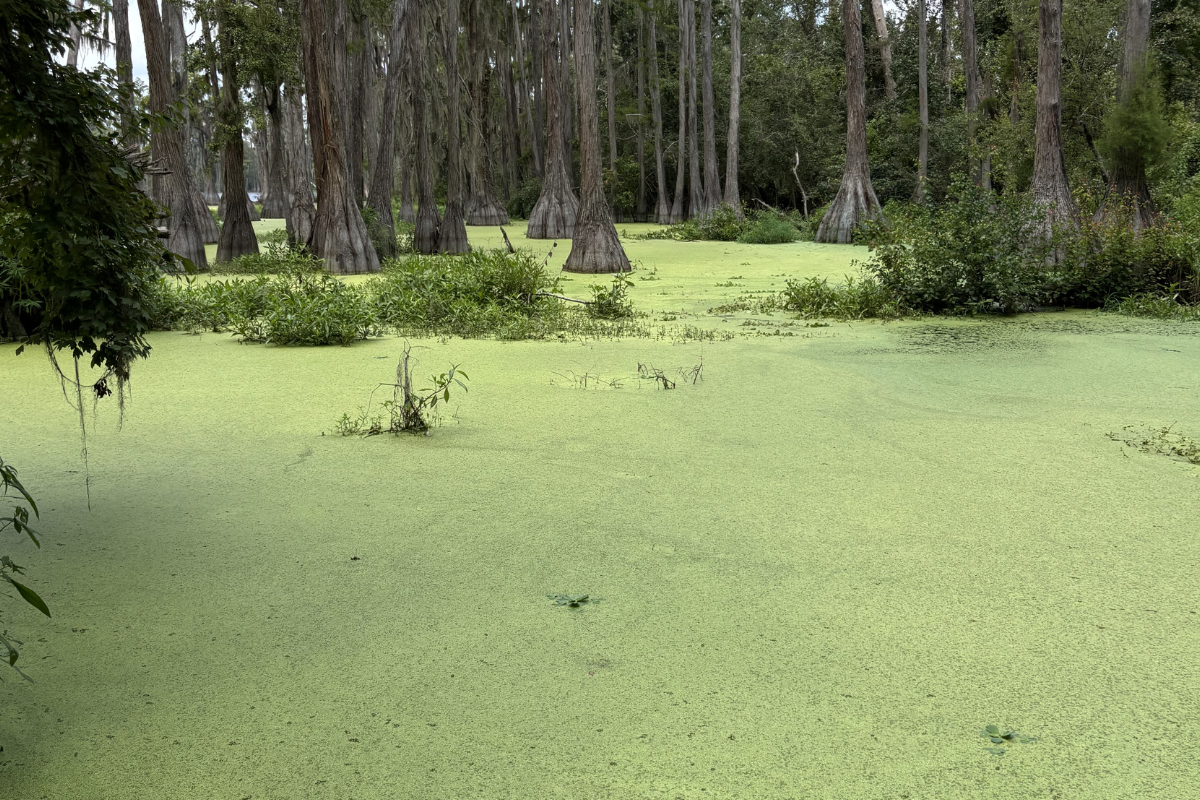
Many pond owners are surprised by just how fast it can spread and take over a pond.
Unlike many aquatic plants that spread primarily through seeds, duckweed reproduces vegetatively. Each tiny floating plant continually produces new plants, allowing populations to double in a matter of days under favorable conditions.
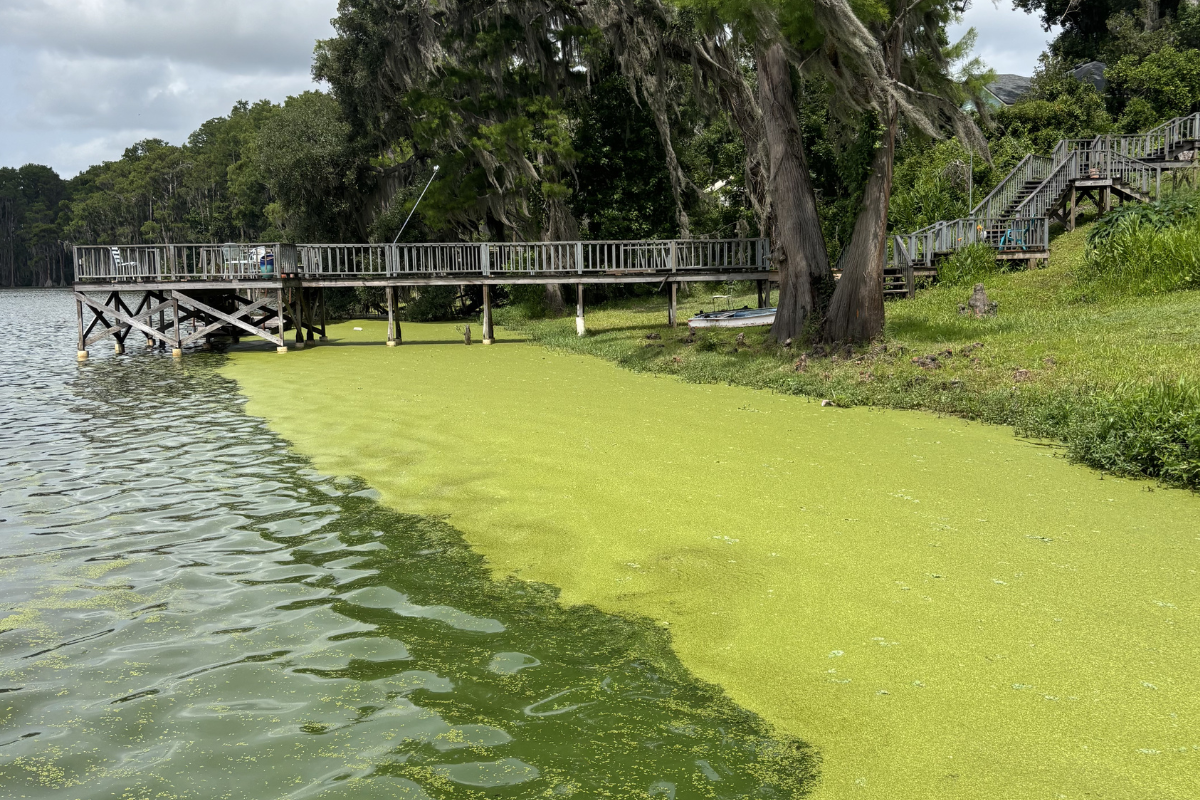
Because it floats freely on the water’s surface, it is easily pushed around by the wind, allowing it to collect in protected coves before eventually spreading across the entire pond.
Waterfowl also play a major role in spreading duckweed. Small pieces can cling to the feet or feathers of ducks, geese, and other birds before being transported to nearby ponds and lakes. Flooding, runoff, and transferring equipment between ponds can also introduce it into previously clean water bodies.
Once established, it doesn’t take long for a few scattered plants to become a thick green carpet.
The Conditions Duckweed Loves
Duckweed thrives in nutrient-rich ponds.
Runoff containing fertilizer from lawns, pastures, crop fields, or livestock operations introduces nitrogen and phosphorus into the water. These nutrients fuel rapid growth.
Calm water conditions also favor fast growth because the tiny plants remain on the surface rather than being mixed throughout the water column. Smaller ponds with limited water movement are especially susceptible.
Warm temperatures during late spring and summer can accelerate reproduction even further, allowing the populations to explode seemingly overnight.
Is Duckweed Ever Good for Fishing?
This is where many online discussions miss the mark.
Some anglers associate duckweed with productive fishing because bass and bluegill often relate to areas that provide overhead cover. Fish may use small patches of it for shade or to ambush prey, much like they use lily pads or other floating vegetation.
However, there is a major difference between scattered patches and complete surface coverage.
When it covers 70%, 80%, or even 100% of a pond, the lack of sunlight and declining oxygen levels begin affecting the entire fish population. Fish become stressed, forage production declines, and the overall health of the pond suffers.
Simply put, a little may provide some benefits, but excessive duckweed creates far more problems than advantages.
Managing Duckweed Before It Gets Out of Control
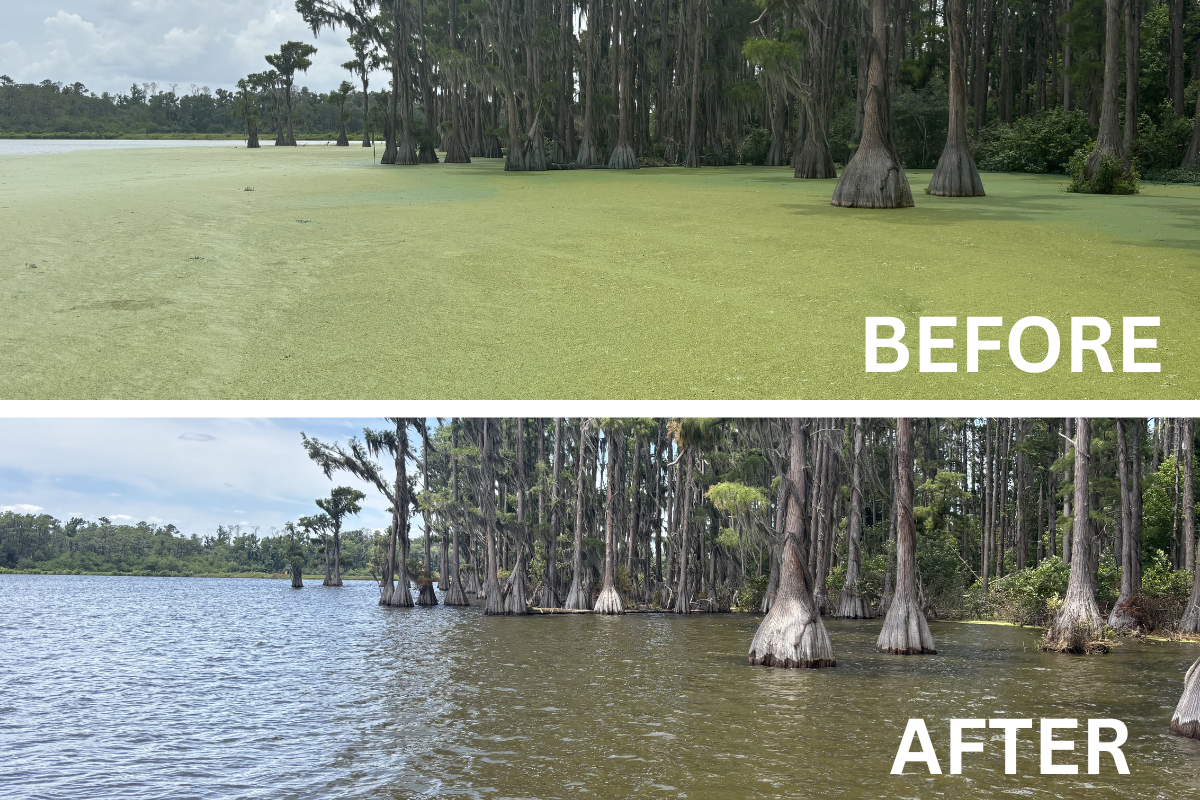
The best time to manage duckweed is while it is still limited to small areas. Once the entire pond is covered, treatment becomes more challenging and often requires a carefully planned approach to avoid sudden oxygen depletion from large amounts of decaying vegetation.
Successful long-term duckweed management usually involves more than simply spraying the plants. Reducing nutrient inputs, improving overall pond health, and developing a long-term management strategy will help prevent duckweed from returning year after year.
At TLC Perfect Pond, we evaluate each pond individually before recommending a treatment plan. Every pond is different, and the goal is never to eliminate beneficial habitat unnecessarily. Instead, we work to maintain the proper balance so your pond remains healthy, productive, and enjoyable for years to come.
If you’re in South Georgia or North Florida and need help managing excessive vegetation in your pond, contact us here to schedule a time to meet and address any issues you’re having with your pond or lake.