
Let’s take a closer look at why ultra-clear water can be problematic, and explore two common strategies to reduce water clarity: pond dye and fertilization.
In the world of pond management, clear water might look nice, but it’s not always a good thing—especially in ponds that are meant to grow and support healthy fish populations. At TLC Perfect Pond, we often talk to landowners across South Georgia and North Florida who are dealing with dense underwater vegetation or struggling to maintain a productive fishery. In many cases, the root of the problem is excessive water clarity.
Why Clear Water Isn’t Always a Good Thing
Most people associate clear water with cleanliness or health, but in ponds, it can actually create serious problems. When sunlight penetrates too deeply into the water column, it fuels the growth of subsurface weeds and invasive aquatic vegetation. These plants—hydrilla, coontail, slender spikerush, and others—quickly take advantage of the light, spreading across your pond bottom and choking out open water.
As these weeds grow, they can crowd out fish, reduce casting and boating access, and even create oxygen problems at night or when they begin to die off. What started as “pretty water” can turn into a tangled mess that ruins the recreational value of your pond and throws your fishery out of balance.
To combat this, pond managers aim to reduce light penetration by slightly muddying up the water—ideally down to about 18 inches of visibility. This inhibits weed growth while also helping promote a more productive fishery.
There are two main ways to do this: adding pond dye or applying pond fertilizer. But while both reduce visibility, they serve very different purposes—and one is clearly the better choice for ponds managed for fishing.

Pond Dye: Looks Good, But Doesn’t Do Much Else
Pond dye is a popular product for landowners who want their pond to have a deep blue or black tint. Pond dye is typically made from safe, water-soluble colorants that reduce light penetration by shading the water.
Pond dye can be effective at blocking sunlight and preventing aquatic weeds from growing in shallow areas. It’s also easy to apply and can give your pond a clean, decorative appearance. But that’s about where the benefits stop.
Pond dye does not promote the growth of phytoplankton, which is the base of the food chain in any productive pond. Phytoplankton—microscopic algae suspended in the water—are vital for feeding zooplankton, which in turn feed small forage fish like bluegill and threadfin shad. These forage fish are the primary diet of largemouth bass and other game fish.
So while pond dye might darken your water and help suppress weed growth, it does nothing to support the biological productivity of your pond. In fact, it may even limit plankton growth by reducing light, which can be counterproductive if your goal is to grow bigger, healthier fish.
Fertilization: The Smart, Productive Option
If your pond’s goal is growing and supporting fish—especially largemouth bass—fertilization is hands-down the better choice.
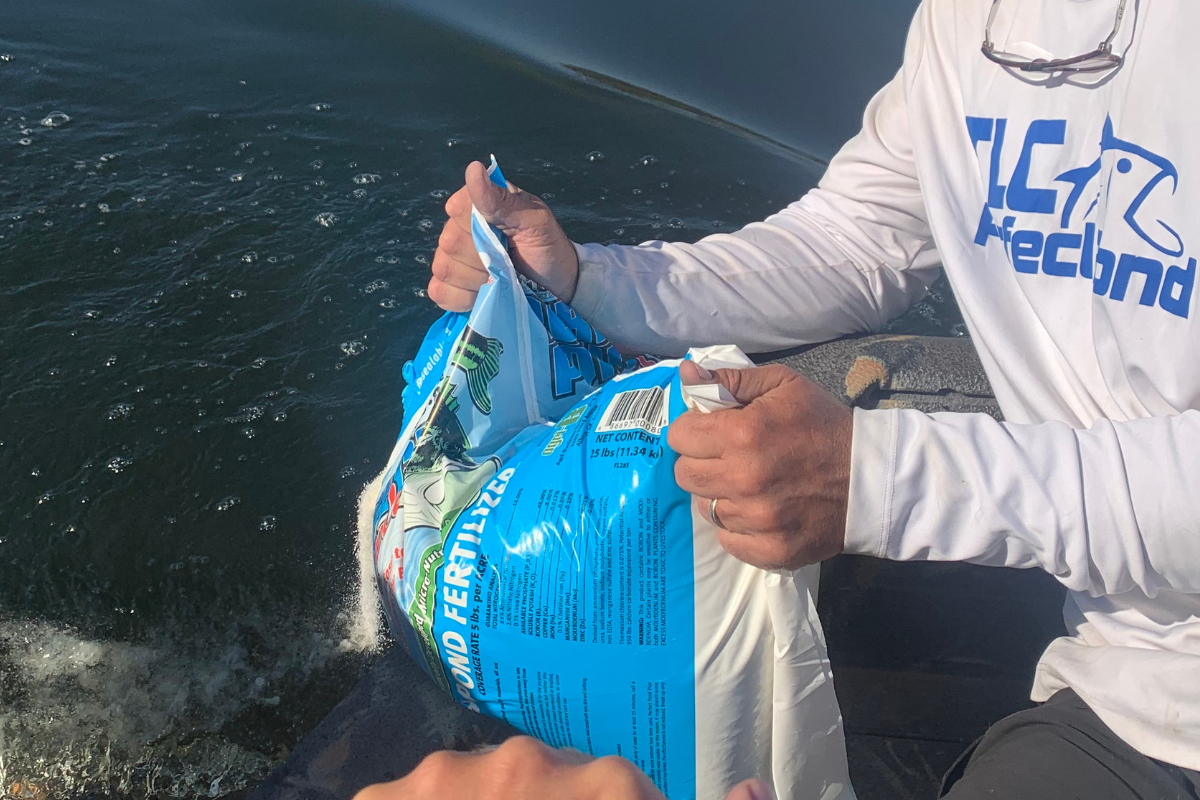
When you fertilize a pond with the right products and timing, you stimulate a phytoplankton bloom. This bloom clouds the water, reducing sunlight penetration and limiting the growth of underwater weeds. At the same time, it supercharges the food web, feeding zooplankton, baitfish, and ultimately your top predator fish.
This makes fertilization the only method that both reduces water clarity and improves your pond’s productivity—essentially killing two birds with one stone.
Pond fertilization is especially important in the sandy soils of South Georgia and North Florida, where ponds are naturally low in nutrients. Without added fertilizer, many ponds in this region remain clear, weed-choked, and biologically poor.
Getting It Right: Fertilize Responsibly
Of course, fertilization isn’t as simple as tossing in some lawn fertilizer and hoping for the best. Proper pond fertilization requires:
- The right product – Typically a pond-specific fertilizer like liquid or granular formulations designed to dissolve into the water column.
- The right timing – Fertilization should begin in early spring when water temperatures are consistently above 60°F and continue through summer with monthly applications.
- Good preparation – If a pond already has a vegetation problem, don’t fertilize until those weeds are under control. Fertilizing an overgrown pond can make things worse by feeding the unwanted vegetation.
- Ongoing monitoring – A Secchi disk is a simple tool used to measure water visibility. Your goal should be to maintain visibility around 18–24 inches for an ideal plankton bloom.
At TLC Perfect Pond, we help landowners develop tailored fertilization programs that match their pond’s unique size, depth, and management goals. We can also help prepare your pond beforehand by controlling existing vegetation or conducting a quick water test to determine if lime should be applied first for better fertilizer performance.
Pond Dye Has Its Place—But It’s Not the Best Tool for Growing Fish
There are situations where dye might make sense—such as aesthetic ponds, neighborhood retention ponds, or water bodies where fishing isn’t the priority. In those cases, pond dye can provide a clean look and help suppress algae or weeds without much effort.
But if your pond is supposed to be a productive fishing hole, fertilization is the superior approach. It supports the food chain, controls water clarity in a natural way, and sets your pond up for long-term success.
Need Help? TLC Perfect Pond Has You Covered
If you’re unsure whether to use pond dye or fertilizer—or if your pond needs a combination of approaches—contact us here. At TLC Perfect Pond, we specialize in helping landowners in South Georgia and North Florida build better fisheries and more enjoyable ponds. Whether you need help with fertilization, vegetation control, or just want a second opinion on your water clarity, we’re here to help.
Let us put our experience to work for your pond. Because a perfect pond doesn’t happen by accident—it happens with TLC.